
Weather that stays
A sad week and a depressive episode are not the same season.
9.1 Normal sadness versus depression
Everyone feels sad or low sometimes, especially after loss, disappointment, failure, or stress. Normal sadness: is usually linked to a specific event; fluctuates, with some positive moments still possible; does not severely impair daily functioning for a long time; gradually improves with time, support, and self-care.
Depression (major depressive disorder or episode) is more severe and persistent:
- Low mood or loss of interest/pleasure most of the day, nearly every day, for at least two weeks.
- Often accompanied by other symptoms (sleep, appetite, energy, concentration, guilt, thoughts of death).
- Causes significant distress or impairment in work, study, relationships, or self-care.
- Not simply a reaction to a single event; it can occur even without an obvious trigger.
9.2 Symptoms
According to WHO and clinical guidelines, common symptoms include:
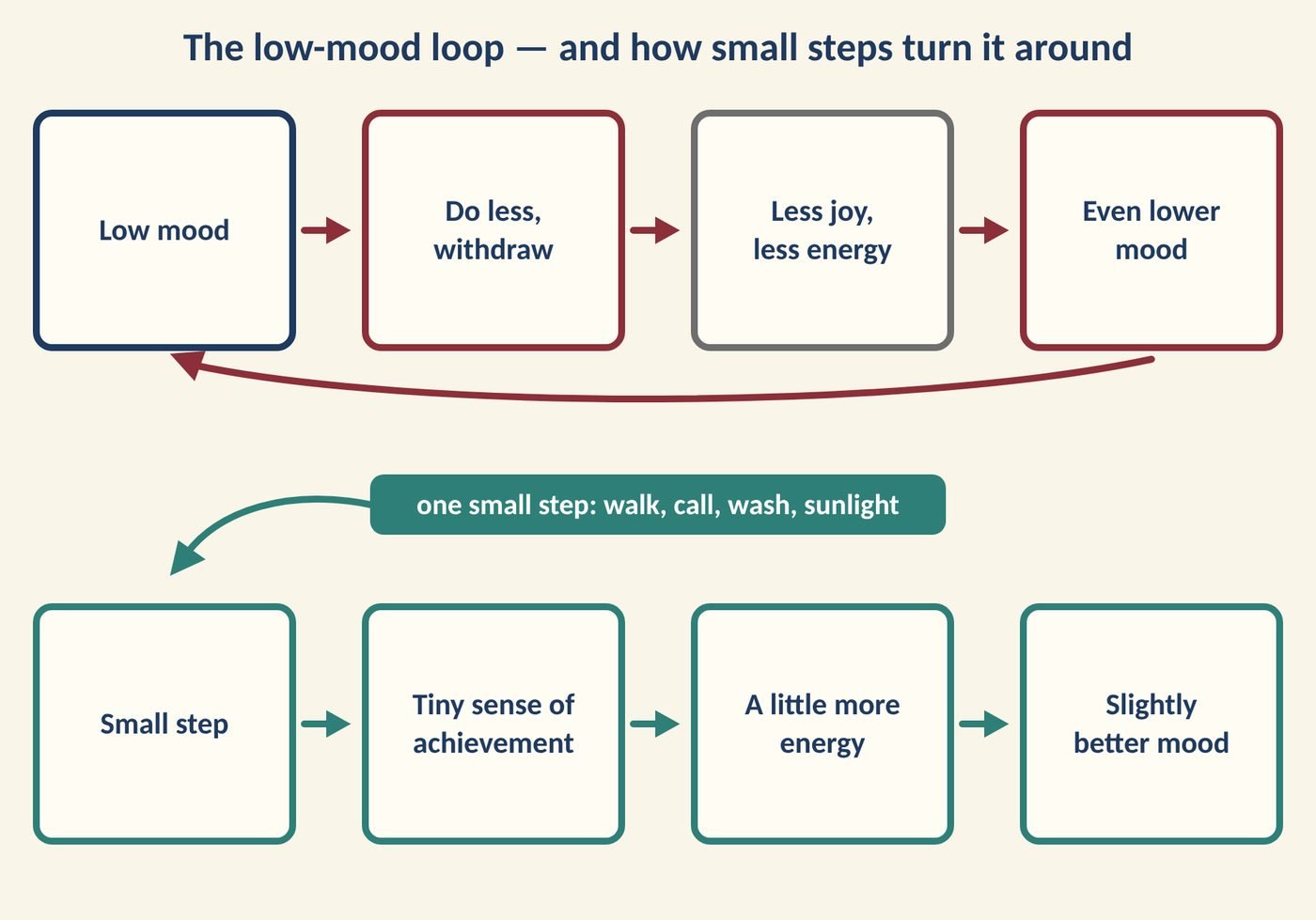
Figure 9.1 The low-mood loop, and how small steps turn it around.
|
Domain |
From this book |
|---|---|
|
Emotional |
Persistent sadness, emptiness, or tearfulness; loss of interest or pleasure (anhedonia); irritability (especially in children and adolescents); hopelessness, helplessness, worthlessness |
|
Cognitive |
Difficulty concentrating, remembering, or deciding; negative thoughts about self, world, and future; excessive guilt; recurrent thoughts of death or suicide |
|
Physical |
Insomnia or sleeping too much; appetite and weight change; fatigue nearly every day; slowing down or restlessness observable by others; unexplained aches, headaches, digestive issues |
|
Behavioural |
Withdrawing; neglecting responsibilities or self-care; reduced productivity; increased alcohol or other substances in some people |
9.3 Types and patterns
- Major depressive disorder (single or recurrent episodes): one or more episodes of major depression.
- Persistent depressive disorder (dysthymia): chronic low mood for at least two years, with fewer symptoms than major depression but longer duration.
- Depression with anxious distress: depression accompanied by significant anxiety.
- Seasonal affective disorder (SAD): occurs in certain seasons (often winter) linked to reduced daylight; light therapy can help.
- Postpartum depression: after childbirth, beyond the common baby blues. Needs professional attention.
- Depression in bipolar disorder: depressive episodes in people who also have manic or hypomanic episodes; treatment differs from unipolar depression.
- Depression with psychotic features: severe depression accompanied by delusions or hallucinations; requires urgent psychiatric care.
9.4 Causes and risk factors
Depression arises from multiple interacting factors. No single cause explains all cases.
- Biological: family history; brain circuit and neurotransmitter changes (serotonin, norepinephrine, dopamine, glutamate, GABA); hormones (thyroid, postpartum, cortisol); medical illnesses (chronic pain, diabetes, heart disease, neurological conditions).
- Psychological: high self-criticism or perfectionism; past trauma or abuse; negative thinking patterns and low self-esteem.
- Social and environmental: loss, relationship breakdowns; chronic stress; loneliness; discrimination, violence, displacement, poverty.
- Lifestyle: poor sleep, substance use, physical inactivity, unhealthy diet can contribute or worsen depression.
9.5 Depression across age groups
- Children: may show irritability, school refusal, somatic complaints, clinginess, or behavioural changes rather than classic sadness.
- Adolescents: irritability, anger, school problems, social withdrawal, sleep changes, risk behaviours, self-harm. Increases risk of academic failure, substance use, and suicide; early intervention is critical.
- Adults: work impairment, relationship conflicts, parenting difficulties, financial problems, substance use.
- Older adults: may be mistaken for normal ageing; can co-occur with medical illness, cognitive decline, loneliness, and bereavement; increases risk of disability and mortality if untreated.
9.6 Depression and suicide risk
Depression is a major risk factor for suicidal thoughts and behaviour, though not everyone with depression becomes suicidal.
Warning signs may include:
- Talking about wanting to die, feeling like a burden, or having no reason to live.
- Looking for ways to kill oneself (searching online, obtaining means).
- Withdrawing from family and friends.
- Giving away possessions or saying goodbye.
- Extreme mood swings, agitation, or reckless behaviour.
- Increased substance use.
If someone shows these signs, especially with a plan or intent, it is a medical emergency. They should not be left alone. Seek urgent help from emergency services, a hospital, or a mental-health professional.
9.7 Diagnosis and assessment
Diagnosis is made by qualified professionals (psychiatrists, clinical psychologists, trained physicians) based on: a detailed interview; screening tools (for example, PHQ-9); ruling out medical causes (thyroid, anaemia, vitamin deficiencies, neurological conditions); assessing suicide risk and safety.
Self-diagnosis is not reliable. If symptoms are persistent and impairing, professional assessment is strongly recommended.
9.8 Treatment
Depression is treatable. Many people recover fully or learn to manage symptoms effectively.
Psychotherapy
- CBT: identify and change negative thought patterns and behaviours; activity scheduling and gradual re-engagement.
- Interpersonal Therapy (IPT): relationships, roles, grief, life transitions.
- Behavioural activation: systematically increasing meaningful and pleasurable activities to counter withdrawal.
- Other: mindfulness-based cognitive therapy (especially to prevent relapse); psychodynamic therapy; family or couples therapy when the unit is part of the problem.
Medicines
Antidepressants often act on serotonin, norepinephrine, or dopamine. They usually take 2–6 weeks to show noticeable effect. Take exactly as prescribed; do not stop abruptly. Side effects vary; a psychiatrist explains benefits and risks.
Mood stabilisers or antipsychotics may be added in bipolar depression, or in severe or psychotic depression. Choice depends on diagnosis, severity, medical history, and response. Medicines are often combined with therapy for moderate to severe depression.
Lifestyle and self-help — support professional treatment
- Regular routine: fixed sleep and wake times, regular meals, structured day.
- Physical activity: even gentle walking most days.
- Sleep: 7–9 hours; address insomnia.
- Social connection: stay in touch even in small ways; join groups to reduce isolation.
- Meaningful activities: gradually re-engage work, study, hobbies, service, or spiritual practice.
- Reducing substances: limit alcohol; avoid recreational drugs.
- Professional follow-up: regular appointments; honest talk about symptoms and side effects.
WHO specifically recommends regular activity, regular sleep and eating patterns, reducing alcohol and drugs, and staying connected as helpful self-care actions for depression.
9.9 Level-wise impact
- Mild: some symptoms; most daily tasks still possible; counselling, lifestyle, and close monitoring.
- Moderate: clear impact on work, study, relationships, or self-care; structured therapy and often antidepressant medication.
- Severe: major difficulty functioning; possible inability to work or care for self; high risk of self-harm or suicide; may need intensive treatment, family support, and possibly hospital care.
- Emergency: active suicidal plans or attempts, severe self-neglect, psychotic symptoms — immediate emergency and psychiatric care.
9.10 Myths
Myth 1: "Depression is just sadness; snap out of it." Fact: it is a medical and psychological condition involving brain, body, and life factors. Not a choice or character flaw.
Myth 2: "Antidepressants change your personality or are always addictive." Fact: they aim to restore mood balance. Most are not addictive when used as prescribed.
Myth 3: "Only serious or dramatic events cause depression." Fact: it can occur after major events, and also without an obvious external cause.
Myth 4: "Talking about depression makes it worse." Fact: sharing with trusted people and professionals often reduces isolation. Silence and stigma delay care.
9.11 The thinking patterns of depression
Aaron Beck, the founder of cognitive therapy, described depression as involving a “negative triad”: a negative view of self (“I’m worthless”), of the world (“Nothing good ever happens”), and of the future (“It will always be like this”). Typical thinking errors include:
- All-or-nothing thinking: “If I’m not perfect, I’m a failure.”
- Mind reading: “They think I’m boring.”
- Overgeneralising: “I failed once, so I always fail.”
- Filtering: focusing only on negatives and ignoring positives.
- Emotional reasoning: “I feel stupid, so I must be stupid.”
- Should statements: “I should be coping better.”
Learning to notice these patterns loosens their grip.
9.12 What you can do for yourself
Self-help is not a substitute for treatment when depression is moderate or severe, but it is a vital partner.
- Start tiny. Get out of bed, shower, step outside. Each is a victory.
- Schedule activities. Plan one pleasant and one useful thing each day, even if you do not feel like it. Action often comes before motivation.
- Move your body. A daily walk is shown to help mild to moderate depression.
- Keep a routine. Regular wake time, meals, and bedtime stabilise the body clock.
- Reach out. Tell one person how you really feel.
- Limit alcohol. It is a depressant and disturbs sleep.
- Be kind to yourself. Speak to yourself as you would to a friend.
- Sunlight and fresh air. Spend time outdoors, especially in the morning.
- Break tasks into small steps.
- Keep to your treatment plan, and tell your doctor honestly about side effects.
9.13 Depression in men, women, and young people
- Men may show depression as irritability, anger, risk-taking, overwork, or alcohol use. Men are less likely to seek help but more likely to die by suicide in most countries. Encouraging men to talk and seek care saves lives.
- Women are diagnosed with depression about twice as often as men, influenced by hormonal changes, caregiving burdens, and social pressures.
- Children and teenagers may seem irritable, bored, or defiant, and may complain of aches or refuse school.
- Older adults may show it as tiredness, pain, memory problems, or withdrawal.
9.14 A simple story
9.15 One companion verse
Reflection activity
- Have you or someone close to you ever experienced prolonged low mood? What signs did you notice?
- Which myth from this chapter have you heard most often in your family or society?
- Name one small, realistic step this week: regular sleep, a short walk, reaching out, or seeking professional advice.
This book is for education and general awareness. It does not replace diagnosis or treatment by a qualified professional. If anyone is in danger, contact your local emergency services.