
What remains when the event is over
Grief is love in a new tense. Trauma is what the nervous system learned.
10.1 Why trauma and loss matter
Life includes difficult experiences: accidents, violence, abuse, disasters, sudden deaths, breakups, job loss, illness, and other forms of loss. Such events can deeply affect the mind, body, relationships, and sense of safety.
Understanding trauma and grief helps people recognise normal reactions, seek timely support, and avoid unnecessary self-blame.
10.2 What is trauma?
Trauma refers to an experience that is emotionally painful, distressing, or life-threatening, and overwhelms a person's ability to cope at that time.
Types of traumatic events may include:
- Physical or sexual abuse.
- Domestic violence.
- War, conflict, terrorism, or displacement.
- Serious accidents (road accidents, industrial accidents).
- Natural disasters (earthquake, flood, fire).
- Sudden or violent loss of loved ones.
- Medical trauma (life-threatening illness, traumatic childbirth, intensive care experiences).
- Community violence or bullying.
10.3 Common reactions to trauma
Reactions can be emotional, physical, cognitive, and behavioural.
|
Domain |
From this book |
|---|---|
|
Emotional |
Shock, numbness, disbelief; fear, anxiety, panic; sadness, tearfulness, grief; anger, irritability, rage; guilt or shame; emotional ups and downs |
|
Physical |
Insomnia, nightmares; fatigue; headaches, body aches, stomach issues; palpitations, breathlessness, dizziness; being easily startled |
|
Cognitive |
Intrusive memories or images; nightmares; difficulty concentrating or remembering; confusion or feeling foggy; negative beliefs ("The world is completely unsafe", "I am permanently damaged") |
|
Behavioural |
Avoiding reminders; withdrawing; increased alcohol, tobacco, or other substances; restlessness; difficulty resuming work, school, self-care |
10.4 Post-Traumatic Stress Disorder (PTSD)
For some people, trauma reactions persist and develop into PTSD. PTSD typically involves four clusters of symptoms lasting more than a month and causing significant impairment.
Intrusion
- Unwanted, distressing memories of the trauma.
- Nightmares.
- Flashbacks (feeling as if the event is happening again).
- Intense emotional or physical reactions to reminders.
Avoidance
Avoiding thoughts, feelings, conversations, places, people, or activities that remind of the trauma.
Negative changes in thoughts and mood
- Persistent negative beliefs about self, others, or the world.
- Blaming self or others excessively.
- Persistent fear, horror, anger, guilt, or shame.
- Loss of interest in activities.
- Feeling detached from others.
- Difficulty experiencing positive emotions.
Hyperarousal and reactivity
- Irritability or angry outbursts.
- Reckless or self-destructive behaviour.
- Hypervigilance (always on guard).
- Exaggerated startle response.
- Difficulty concentrating.
- Sleep disturbance.
PTSD can occur soon after trauma or months or years later. It is treatable with specialised therapies and, when needed, medicines.
10.5 Complex trauma and complex PTSD
Complex trauma refers to repeated or prolonged traumatic experiences, often in childhood or in situations where escape is difficult (chronic abuse, domestic violence, captivity, war).
Effects may include:
- Severe difficulties in emotion regulation (intense anger, chronic emptiness, dissociation).
- Negative self-concept (feeling worthless, damaged, or permanently different).
- Relationship difficulties (trust issues, isolation, repeated unsafe relationships).
- Dissociation (feeling detached from body or reality, memory gaps).
Some classification systems describe Complex PTSD, which includes core PTSD symptoms plus these additional difficulties. Treatment often requires longer-term, trauma-informed therapy.
10.6 Grief and bereavement
Grief is the natural response to loss, especially the death of a loved one, but also to other losses (relationship breakup, loss of health, job, home, identity).
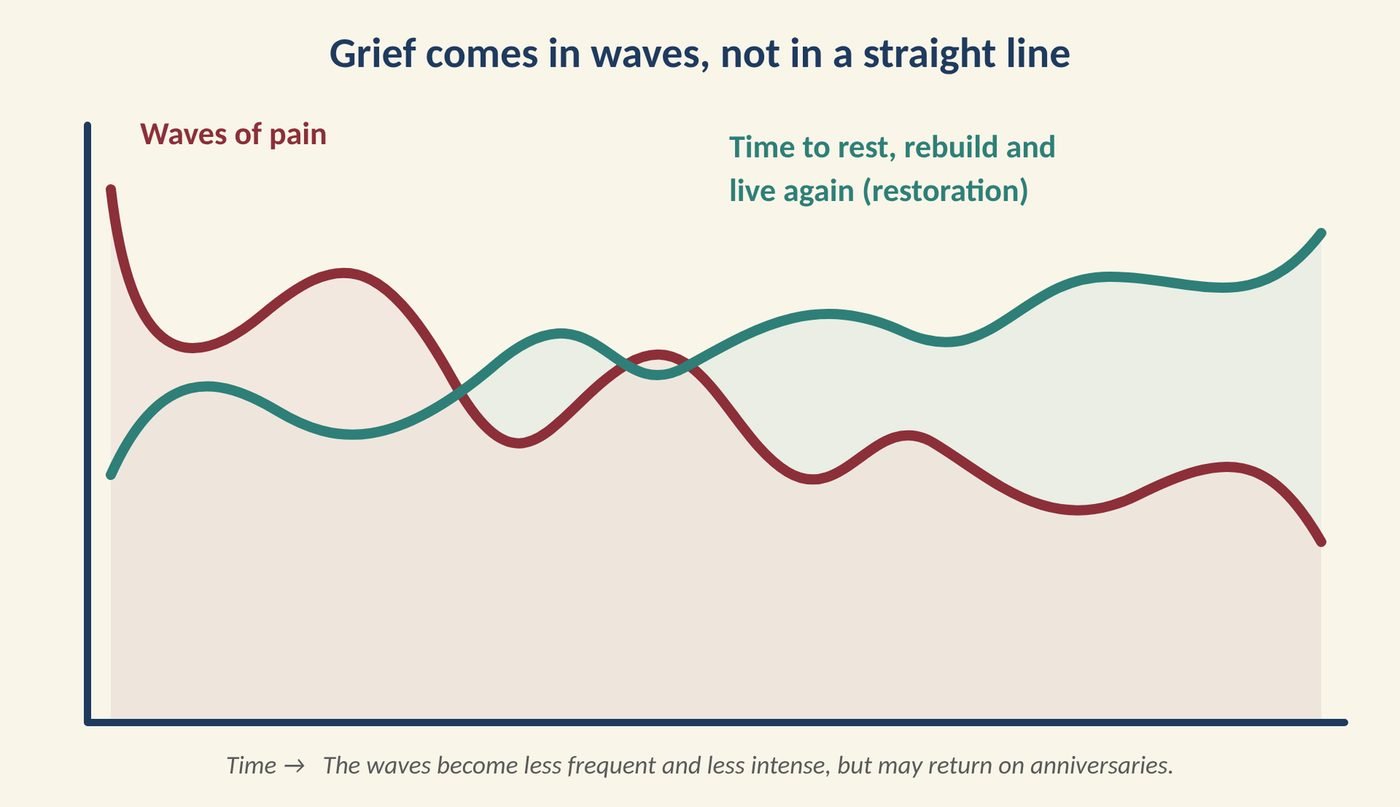
Figure 10.1 Grief comes in waves, not in a straight line.
Common grief reactions include: shock and disbelief; deep sadness, crying, yearning; anger at self, others, fate, or even the deceased; guilt or regret; anxiety about the future; physical symptoms (fatigue, sleep, appetite, aches); difficulty concentrating or deciding.
Grief often comes in waves. Some days feel easier; others feel overwhelming. Cultural and religious rituals (funerals, prayer, memorial ceremonies, shraddha, church services) can provide structure, support, and meaning.
Normal grief versus complicated grief
Normal (uncomplicated) grief: intense pain, especially in early months; gradually becomes less overwhelming; the person can still experience moments of joy or connection; slowly resumes daily activities and relationships.
Complicated or prolonged grief: intense grief persists for many months or years without easing; severe impairment; persistent inability to accept the loss; intense yearning, bitterness, or emptiness; may co-occur with depression, PTSD, or substance use. Professional support (grief counselling, therapy, sometimes medicines for co-occurring depression or anxiety) can be very helpful.
10.7 Trauma, grief and the brain
- Amygdala: may become overactive, increasing fear and alertness.
- Hippocampus: can be affected, leading to memory difficulties and fragmented trauma memories.
- Prefrontal cortex: regulation of emotions and rational thinking may be reduced.
- Stress hormones: chronic high cortisol can disturb sleep, mood, and physical health.
Therapy, safety, supportive relationships, and time can help the brain and body recover. Neuroplasticity means healing and reorganisation are possible.
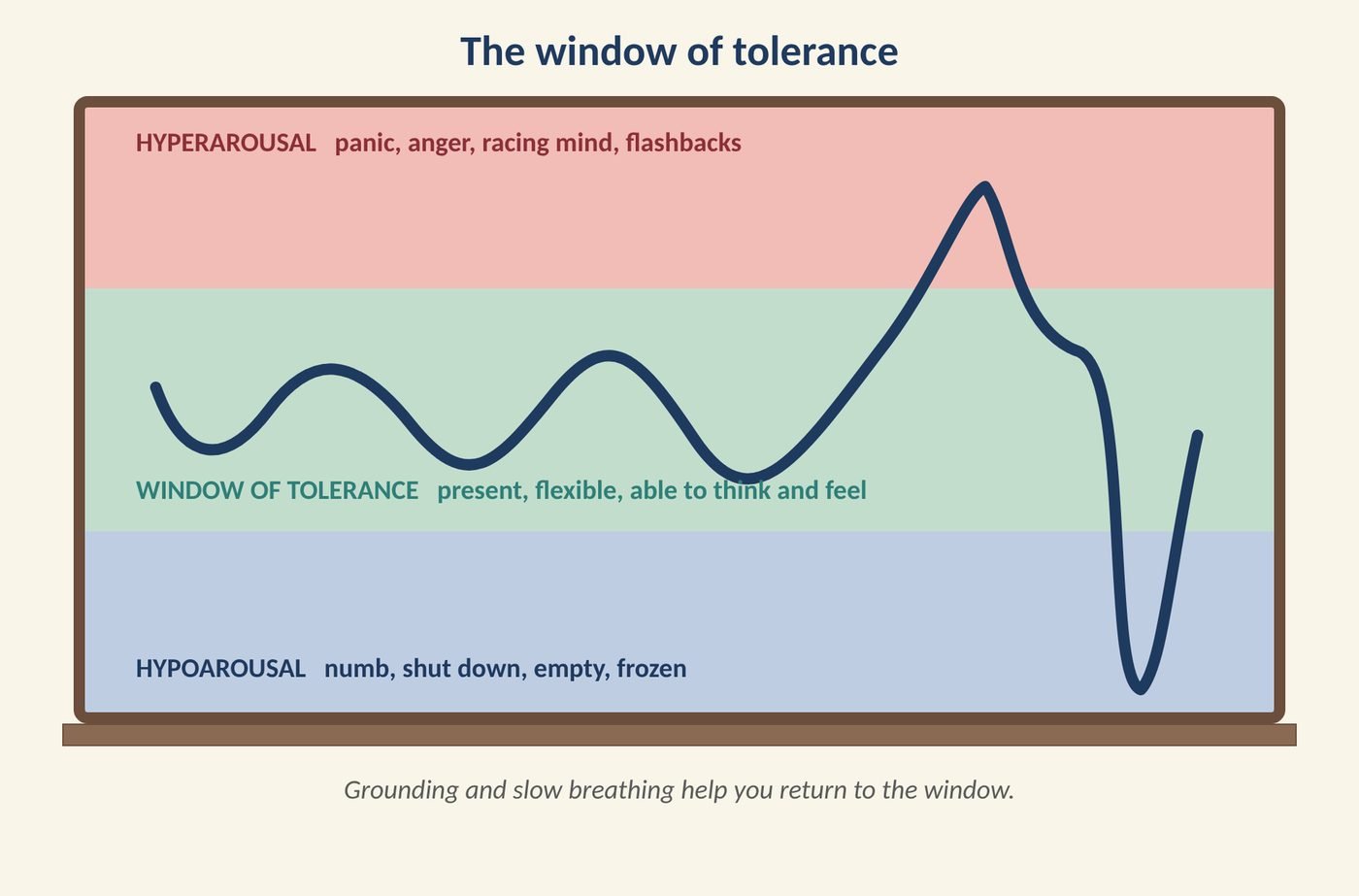
Figure 10.2 The window of tolerance.
10.8 Trauma-informed care
Trauma-informed care recognises how common trauma is and how it affects people. Key principles:
- Safety (physical and emotional).
- Trustworthiness and transparency.
- Peer support and connection.
- Collaboration and shared decision-making.
- Empowerment and choice.
- Sensitivity to cultural, historical, and gender issues.
Professionals avoid re-traumatising practices, explain procedures clearly, respect boundaries, and empower the person. This matters in mental-health services, medical care, schools, and other systems.
10.9 Healing from trauma and loss
Healing does not mean forgetting; it means integrating the experience so it no longer controls daily life.
- Safety and stability: safe environment, basic needs met, predictable routine.
- Supportive relationships: trusted family, friends, community, support groups.
- Therapy: trauma-focused CBT; EMDR (Eye Movement Desensitisation and Reprocessing); narrative exposure therapy; other trauma-informed approaches.
- Body-based practices: breathing, grounding, yoga, gentle movement, walking; sleep and nutrition support.
- Meaning-making: spiritual practices, prayer, rituals; journaling, art, music; helping others who have similar experiences when ready.
- Medicines when needed: for severe depression, anxiety, PTSD symptoms, or sleep problems, under psychiatric care.
Healing is often non-linear: there can be good days and bad days. Patience and support are crucial.
10.10 Children and adolescents
Children: regression (bedwetting, clinginess, baby talk); play that repeats themes of the trauma; nightmares, sleep problems; irritability, tantrums, school refusal; somatic complaints.
Adolescents: risk behaviours (substance use, reckless driving); self-harm; anger, conflicts with family; withdrawal from friends and activities; academic decline.
10.11 When to seek professional help
- Trauma or grief reactions are severe, persistent, or worsening over weeks and months.
- Daily functioning (work, study, self-care, relationships) is significantly impaired.
- There are thoughts of self-harm, suicide, or harming others.
- There is heavy reliance on alcohol or drugs to cope.
- Flashbacks, nightmares, or avoidance are dominating life.
- Family or friends express serious concern.
Help can come from psychiatrists, clinical psychologists, counsellors trained in trauma, and community support services. In emergencies (immediate risk of harm), urgent medical and psychiatric care is needed.
10.12 Acute stress disorder and adjustment problems
Strong reactions that begin within the first month after trauma and last from three days to a month are called acute stress disorder. Many people recover without lasting problems. Those whose symptoms persist beyond a month may have PTSD.
10.13 Childhood adversity
Adverse childhood experiences, including abuse, neglect, household violence, a parent with serious mental illness or addiction, or parental separation, are linked with higher risks of depression, anxiety, addiction, and physical illness in adult life. The risk grows with the number of experiences. But it is not destiny. A caring adult, a stable school, friendships, and later therapy all protect children and help adults recover.
Children react to trauma differently than adults. Younger children may regress (bedwetting, clinging), play out the events, have nightmares, or complain of stomach aches. Teenagers may show anger, risk-taking, or withdrawal. Children need safety, routine, honest simple explanations, and reassurance that it was not their fault.
10.14 Who is more likely to develop PTSD?
Risk is higher when:
- The trauma was severe, prolonged, or caused by another person
- There were earlier traumas or a history of childhood adversity
- The person was injured or feared for their life
- Support afterward was lacking
- There was a previous mental health problem
- Ongoing stress followed the event (such as loss of home or income)
Protective factors include social support, feeling safe afterward, having someone to talk to, and access to care.
10.15 Treatments that work
Trauma treatments are among the best-researched in mental health, and the results are encouraging. Trauma-focused therapies help most people.
Trauma-focused CBT
Helps people understand their reactions, learn calming skills, gradually face memories and reminders in a safe setting, and change unhelpful beliefs about the trauma, such as unfair self-blame.
Prolonged exposure therapy
A structured form of CBT in which the person carefully and gradually revisits the memory and avoided situations, under the guidance of a therapist, until they lose their power.
Cognitive processing therapy
Focuses on identifying and shifting “stuck points,” beliefs about why the event happened and what it means.
EMDR (Eye Movement Desensitisation and Reprocessing)
The person recalls parts of the trauma briefly while following the therapist’s guided eye movements or other alternating stimulation. It is recommended by many health organisations for PTSD. Researchers continue to discuss exactly how it works.
Medicines
SSRIs such as sertraline and paroxetine and the SNRI venlafaxine can reduce PTSD symptoms and are often used alongside therapy. Some medicines may be used for specific problems, such as nightmares or sleep. Doctors take care to avoid long-term use of sedatives, which can interfere with trauma recovery.
Phases of healing
Many trauma specialists describe three phases:
- Safety and stabilisation: building safety, learning to manage strong emotions, and strengthening support.
- Processing: working through the memory and its meaning.
- Reconnection: rebuilding relationships, purpose and a sense of future.
10.16 What helps after a traumatic event
If you or someone you know has just been through something frightening:
- Get safe and meet basic needs: food, water, rest, and shelter.
- Connect with trusted people. You do not have to talk about details, but do not isolate.
- Return to routine gradually: regular meals, sleep, and light activity.
- Be gentle with yourself. Strong reactions are normal.
- Limit alcohol and drugs.
- Limit repeated exposure to news or images of the event.
- Talk when ready. Do not force yourself or others to retell the story. Early formal “debriefing” in which people are pushed to relive events has not been shown to prevent PTSD.
- Seek help if symptoms are severe, last more than a month, or you feel unsafe.
10.17 Grounding skills for flashbacks and overwhelming feelings
Grounding returns attention to the present.
- Name where you are, today’s date, and that you are safe now.
- Press your feet firmly into the floor.
- Hold something cold, textured, or heavy.
- Look around and name five blue things.
- Breathe out slowly.
- Say to yourself: “This is a memory. It is not happening now.”
10.18 Supporting someone who has experienced trauma
- Listen without judging or pushing for details.
- Believe them. Avoid blaming comments such as “Why didn’t you leave?”
- Offer practical help: meals, rides, childcare.
- Respect their pace and avoid forcing talk.
- Be patient with irritability and withdrawal.
- Encourage professional help and offer to attend appointments.
- Look after yourself too; supporters can feel overwhelmed.
10.19 Post-traumatic growth
Although trauma brings pain, many survivors also report positive changes over time: deeper appreciation of life, stronger relationships, greater personal strength, new priorities, and a stronger sense of purpose. This is called post-traumatic growth. It does not make the trauma “worth it” and it is not required for recovery, but it shows that people can heal and find meaning.
10.20 A simple story
10.21 One companion verse
Reflection activity
- Have you or someone you know experienced a difficult event? What reactions did you notice?
- Which idea from this chapter (normal grief, PTSD, trauma-informed care, healing steps) was most meaningful or new?
- Name one supportive action you could offer someone who is grieving or recovering (listen without judging, help with tasks, encourage professional help, accompany them).
This book is for education and general awareness. It does not replace diagnosis or treatment by a qualified professional. If anyone is in danger, contact your local emergency services.