
When the alarm will not reset
Panic is a body event first. Avoidance shrinks a life.
8.1 Normal anxiety versus anxiety disorder
Anxiety is a normal human emotion. It is the mind and body's response to perceived threat or uncertainty. Everyone feels anxious sometimes: before an exam, interview, medical test, or important event.
Normal anxiety: is proportional to the situation; comes and goes; does not severely impair daily life; can even improve performance by increasing alertness.
An anxiety disorder is different. It involves:
- Excessive, persistent anxiety or worry (most days for weeks or months).
- Difficulty controlling the worry.
- Significant distress or problems in work, study, relationships, or health.
- Often accompanied by physical symptoms: palpitations, breathlessness, dizziness, stomach issues, muscle tension, sleep problems.
Anxiety disorders are among the most common mental-health conditions worldwide, and they are treatable with psychological therapies, lifestyle changes, and when needed, medicines.
8.2 Common types
Generalised Anxiety Disorder (GAD)
Main feature: excessive, uncontrollable worry about multiple areas of life (work, health, family, finances, minor matters) most days for at least six months.
Symptoms may include: restlessness or feeling on edge; fatigue; difficulty concentrating or mind going blank; irritability; muscle tension; sleep disturbance.
People with GAD often describe themselves as chronic worriers who imagine worst-case scenarios.
Panic disorder
Panic attack symptoms may include: palpitations or pounding heart; sweating, trembling, shaking; shortness of breath or feeling smothered; chest pain; nausea or abdominal distress; dizziness, lightheadedness, faintness; chills or heat; numbness or tingling; fear of losing control, "going crazy", or dying.
In panic disorder the person worries about having more attacks and may change behaviour to prevent them (avoiding exercise, certain places, or situations).
Panic attacks are extremely uncomfortable but not dangerous in themselves; however, they should be medically evaluated to rule out heart or other physical problems.
Social anxiety disorder (social phobia)
Main feature: intense fear or anxiety about social situations where the person may be observed or judged (speaking in public, eating in front of others, meeting new people, attending gatherings).
Concerns often include: fear of embarrassment or humiliation; fear of appearing anxious, awkward, or incompetent; worry for days or weeks before a social event.
Behaviour: avoidance of social situations or enduring them with intense distress. This can severely affect education, career, and relationships.
Specific phobias
Main feature: marked fear or anxiety about a specific object or situation (heights, flying, animals, blood, injections, enclosed spaces, storms).
Characteristics: fear is out of proportion to actual danger; the situation is avoided or endured with intense anxiety; the fear causes significant distress or impairment. Phobias are common and highly treatable, often with exposure-based therapy.
Agoraphobia
Main feature: fear or anxiety about situations where escape might be difficult or help unavailable if panic-like symptoms occur.
Common feared situations: public transport; open or enclosed spaces; standing in line or being in a crowd; being outside the home alone.
People may avoid many situations or only go out with a trusted companion. In severe cases they may become housebound.
Separation anxiety disorder
Main feature: excessive fear or anxiety about separation from attachment figures (parents, spouse, children). Common in children but can also occur in adults.
Symptoms may include: distress when separation occurs or is anticipated; worry about harm coming to attachment figures; reluctance or refusal to go to school, work, or sleep alone; nightmares about separation. When persistent and impairing, it is a disorder.
Selective mutism
Main feature: consistent failure to speak in specific social situations (for example, school) despite speaking in other situations (for example, at home). Usually begins in childhood. Strongly associated with social anxiety. Early intervention is important.
8.3 Causes and risk factors
Anxiety disorders arise from a combination of factors. No single cause explains all cases.
- Biological: genetic vulnerability; brain circuit differences (amygdala hyperactivity, prefrontal regulation issues); neurotransmitter imbalances (serotonin, norepinephrine, GABA, glutamate).
- Psychological: temperament (behavioural inhibition, high sensitivity); learned patterns (highly critical or anxious environment); cognitive styles (catastrophising, overestimating danger).
- Environmental: stressful life events (loss, trauma, abuse, bullying, accidents); chronic stress; substance use (caffeine, stimulants, some drugs can worsen anxiety).
8.4 Anxiety and the body
- Cardiovascular: palpitations, chest tightness, increased blood pressure during spikes.
- Respiratory: shortness of breath, hyperventilation.
New chest pain that is severe still belongs in casualty until a physician says otherwise. Then the panic plan can begin.
8.5 Treatment
Psychological therapies
Cognitive Behavioural Therapy (CBT): most evidence-based therapy for anxiety disorders. Helps identify and change unhelpful thoughts (catastrophising) and behaviours (avoidance). Includes exposure.
Other therapies: Acceptance and Commitment Therapy (ACT); mindfulness-based therapies; psychodynamic or interpersonal therapies when anxiety is linked to relationship patterns or past experiences. Therapy can be individual, group-based, or online.
Medicines
Used when anxiety is moderate to severe, or when therapy alone is not enough.
- Antidepressants (SSRIs, SNRIs): first-line for many anxiety disorders (GAD, panic, social anxiety, OCD, PTSD). Work by modulating serotonin and/or norepinephrine. Take several weeks; must not be stopped abruptly.
- Benzodiazepines: fast-acting (for example, lorazepam, clonazepam). Short-term or crisis use because of dependence and sedation. Only under strict medical supervision.
- Other: beta-blockers for performance anxiety (tremor, palpitations); buspirone for generalised anxiety in some cases; other options depending on diagnosis.
Medicines should always be prescribed and monitored by a qualified doctor, typically a psychiatrist.
Lifestyle and self-help — support, do not replace, professional treatment
- Regular physical activity (walking, yoga, sports).
- Good sleep routine.
- Reducing caffeine, nicotine, and alcohol.
- Breathing exercises and relaxation.
- Mindfulness or meditation.
- Limiting excessive news or disturbing content.
- Building social support and sharing feelings with trusted people.
8.6 Anxiety in children and adolescents
May show as: excessive clinginess or school refusal; stomach aches or headaches without clear medical cause; irritability, tantrums, sleep problems; avoidance of social or performance situations (class presentations).
Early recognition matters. Parental involvement, school counsellors, and child mental-health specialists play key roles. Untreated anxiety can affect education, social development, and increase risk of depression later.
8.7 Level-wise impact
- Mild: occasional worry that passes; little impact; self-help often sufficient.
- Moderate: frequent worry, physical symptoms, some avoidance; noticeable impact; counselling recommended; medical evaluation may help.
- Severe: constant anxiety, panic attacks, major avoidance, significant impairment; often combined therapy and medicines under psychiatric care.
- Emergency: anxiety with suicidal thoughts, inability to care for self, or a co-occurring crisis — urgent professional and possibly emergency care.
8.8 Myths
Myth 1: "Anxiety is just overthinking; pull yourself together." Fact: anxiety disorders involve real changes in brain circuits, stress systems, and body responses. Willpower alone is usually not enough.
Myth 2: "Medicines for anxiety are always addictive." Fact: benzodiazepines can be habit-forming if misused; many first-line medicines (SSRIs, SNRIs) are not addictive when used as prescribed.
Myth 3: "Avoiding feared situations is the best way to stay safe." Fact: avoidance reduces anxiety briefly but strengthens fear. Gradual, supported exposure is more effective in the long run.
Myth 4: "Only weak people get anxiety disorders." Fact: they can affect anyone. Seeking help is a sign of wisdom, not weakness.
8.9 The anxiety cycle
Anxiety keeps itself going through a loop:
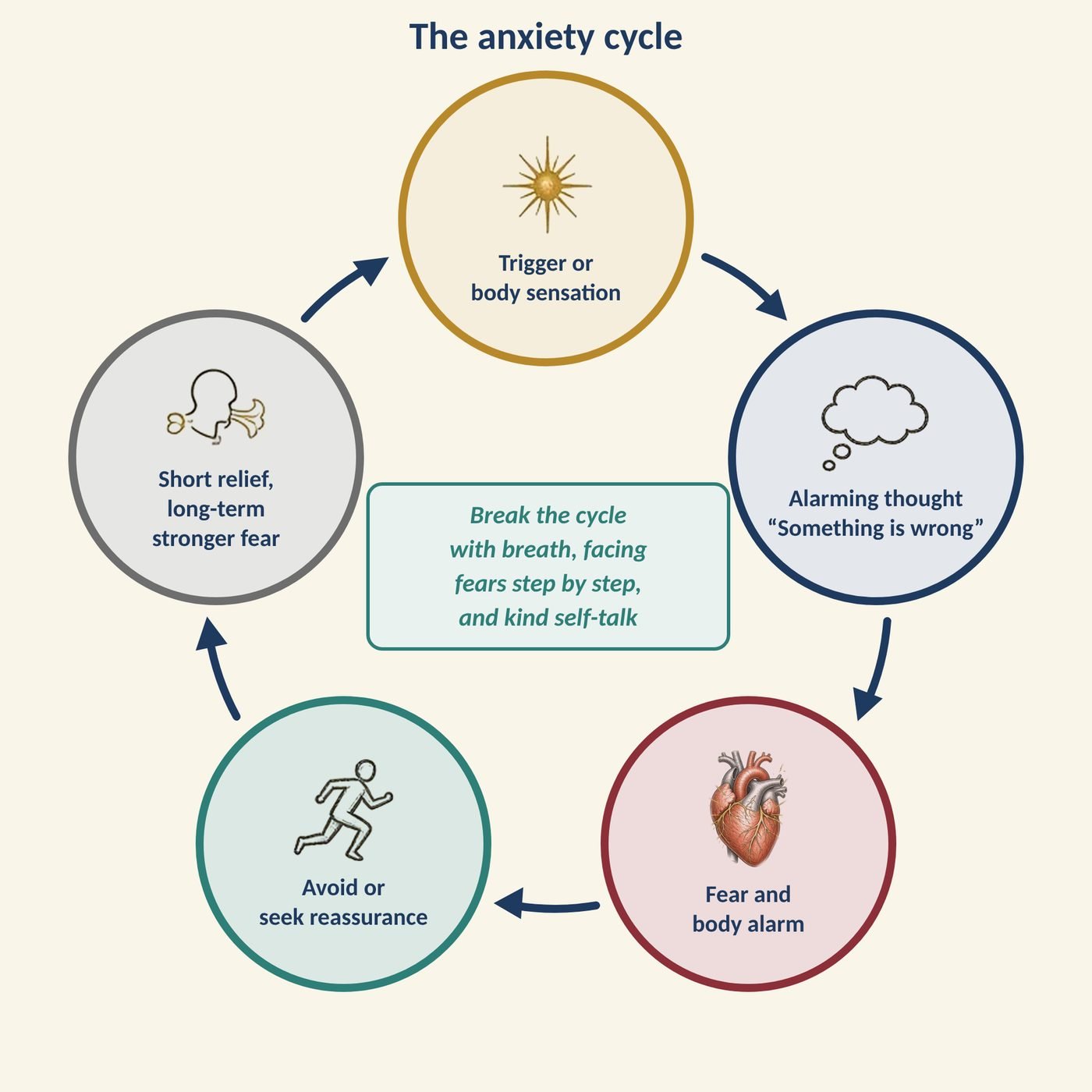
Figure 8.1 The anxiety cycle: avoidance gives short relief and keeps fear alive.
- A trigger (a situation, a thought, or a body feeling)
- A threat thought (“Something bad will happen”)
- Body alarm (racing heart, sweating)
- Safety behaviour (avoiding, escaping, over-checking, seeking reassurance)
- Short-term relief (anxiety drops)
- Long-term cost (the brain learns that avoidance was needed, so the fear grows, and life shrinks)
Every time we avoid something we fear, we teach the brain it was truly dangerous. Treatment works largely by breaking this loop.
8.10 Anxiety in daily life: useful techniques
The worry decision tree
When a worry appears, ask: “Is this a problem I can do something about right now?”
- Yes: plan one small action and do it, or schedule it.
- No: let the thought pass. Remind yourself, “I cannot solve this now.” Turn attention to something in the present.
Challenging anxious thoughts
Ask yourself:
- What is the evidence for this thought? What is the evidence against?
- What is the most likely outcome?
- If the worst did happen, how would I cope?
- What would I say to a friend with the same worry?
Grounding with the senses
Anxiety pulls the mind into the future. Grounding brings it back. Feel your feet on the floor. Hold something cold. Name what you can see. The present moment is nearly always safer than your imagination.
8.11 A simple story
8.12 One companion verse
Reflection activity — Chapter 8
- What do you avoid that has grown since last year?
- If a panic wave came tonight, whom would you tell, and where is the nearest casualty if chest pain is new?
- Which myth from this chapter has your family used?
This book is for education and general awareness. It does not replace diagnosis or treatment by a qualified professional. If anyone is in danger, contact your local emergency services.