
Blood work before blame
Thyroid and glucose can impersonate a psychiatric diagnosis. Test first.
21.1 Overview
Mental health is deeply connected to physical biochemistry. Hormones, neurotransmitters, vitamins, minerals, and metabolic processes all influence brain function and emotional wellbeing.
21.2 Thyroid function
Thyroid hormones (T3, T4) regulate metabolism, energy, temperature, and growth. They are produced by the thyroid gland in the neck and controlled by TSH from the pituitary.
Hypothyroidism (low thyroid)
Symptoms: fatigue, depression, weight gain, cold intolerance, brain fog, dry skin, constipation. Mental-health impact: can mimic or worsen depression and cognitive slowing. Testing: TSH, Free T3, Free T4. Treatment: thyroid hormone replacement under a doctor.
Hyperthyroidism (high thyroid)
Symptoms: anxiety, irritability, weight loss, heat intolerance, rapid heartbeat, tremors. Mental-health impact: can mimic anxiety disorders, panic attacks, mania. Treatment: anti-thyroid medicines, radioactive iodine, or surgery as a physician decides.
Important: thyroid testing should be part of mental-health assessment.
21.3 Blood sugar
Insulin allows cells to use glucose. Glucose is the primary fuel for brain cells. Stability is critical for mental function.
Hypoglycaemia: irritability, anxiety, confusion, shakiness, mood swings, brain fog. Can trigger anxiety, panic, irritability, depression. Prevention: regular meals, balanced nutrition, protein with carbohydrates.
Hyperglycaemia / diabetes: fatigue, increased thirst, frequent urination, blurred vision. Increased risk of depression, cognitive decline, anxiety. Management: diet, exercise, medication, monitoring.
Sugar crashes can cause irritability and anxiety. Stable blood sugar supports stable mood. Complex carbohydrates provide sustained energy. Protein and healthy fats slow glucose absorption.
21.4 Vitamins
Vitamin D
Hormone-like vitamin supporting brain and immune function. Deficiency linked to depression, SAD, and cognitive decline. Sources: sunlight, fatty fish, fortified foods, supplements. Testing: 25-hydroxy vitamin D. An often-cited range around 30–50 ng/mL (some experts 40–60). Confirm with a clinician for your country and lab.
B vitamins
- B12: nerve function, DNA, red cells. Deficiency: depression, anxiety, memory problems, fatigue, neuropathy. Sources: animal products, fortified foods. At risk: vegans, elderly, people with digestive issues.
- B9 (folate): DNA and neurotransmitter production. Deficiency: depression, cognitive impairment, anaemia. Sources: leafy greens, legumes, fortified grains. Important in pregnancy.
- B6: synthesis of serotonin, dopamine, GABA. Deficiency: depression, confusion, weakened immunity. Sources: fish, poultry, potatoes, bananas.
- B1, B2, B3, B5: energy metabolism and brain function. Deficiencies can cause fatigue, depression, cognitive problems.
Vitamins C and E
Vitamin C: antioxidant, neurotransmitter synthesis, immune support. Deficiency: fatigue, depression, weakened immunity (scurvy when severe). Sources: citrus, berries, peppers, broccoli.
Vitamin E: antioxidant, protects membranes. Deficiency: neurological problems, muscle weakness. Sources: nuts, seeds, vegetable oils.
21.5 Minerals
- Magnesium: 300+ reactions, nerve function, muscle relaxation. Deficiency linked to anxiety, depression, insomnia, migraines, cramps. Sources: greens, nuts, seeds, whole grains, dark chocolate. Forms: glycinate (calming), citrate, oxide (less absorbable).
- Zinc: immune and neurotransmitter function. Deficiency linked to depression, immunity, hair loss, taste changes. Sources: meat, shellfish, legumes, seeds, nuts.
- Iron: oxygen transport, energy, neurotransmitter synthesis. Anaemia: fatigue, depression, brain fog, pale skin, shortness of breath. Excess can be toxic. Get tested before supplementing.
- Selenium: antioxidant and thyroid function. Deficiency linked to depression, anxiety, thyroid problems. Sources: Brazil nuts, seafood, meat.
- Calcium: bone, nerve, muscle. Imbalance can affect mood, anxiety, muscle function. Sources: dairy, leafy greens, fortified foods.
21.6 Amino acids and omega-3
- Tryptophan → serotonin. Sources: turkey, chicken, eggs, cheese, nuts, seeds. Supports mood, sleep, appetite.
- Tyrosine → dopamine and noradrenaline. Sources: meat, fish, eggs, dairy, soy, nuts. Supports motivation, focus, alertness, mood.
- Glutamine → GABA. Sources: meat, fish, eggs, dairy, legumes. Supports calm, relaxation, sleep.
Omega-3: EPA (anti-inflammatory, mood), DHA (brain structure, cognition), ALA (plant; converts poorly). Benefits named: less brain inflammation, membrane fluidity, possible help in depression, anxiety, ADHD. Best food sources of EPA/DHA: salmon, mackerel, sardines, herring. Plant ALA: flax, chia, walnuts. Algae oil is a vegan EPA/DHA option. Doses in the text are often-cited ranges — confirm with a clinician.
21.7 Gut–brain axis and inflammation
The gut contains 100+ million nerve cells (enteric nervous system), produces much of the body's serotonin, and connects to the brain via the vagus nerve. Gut bacteria influence mood, cognition, and behaviour.
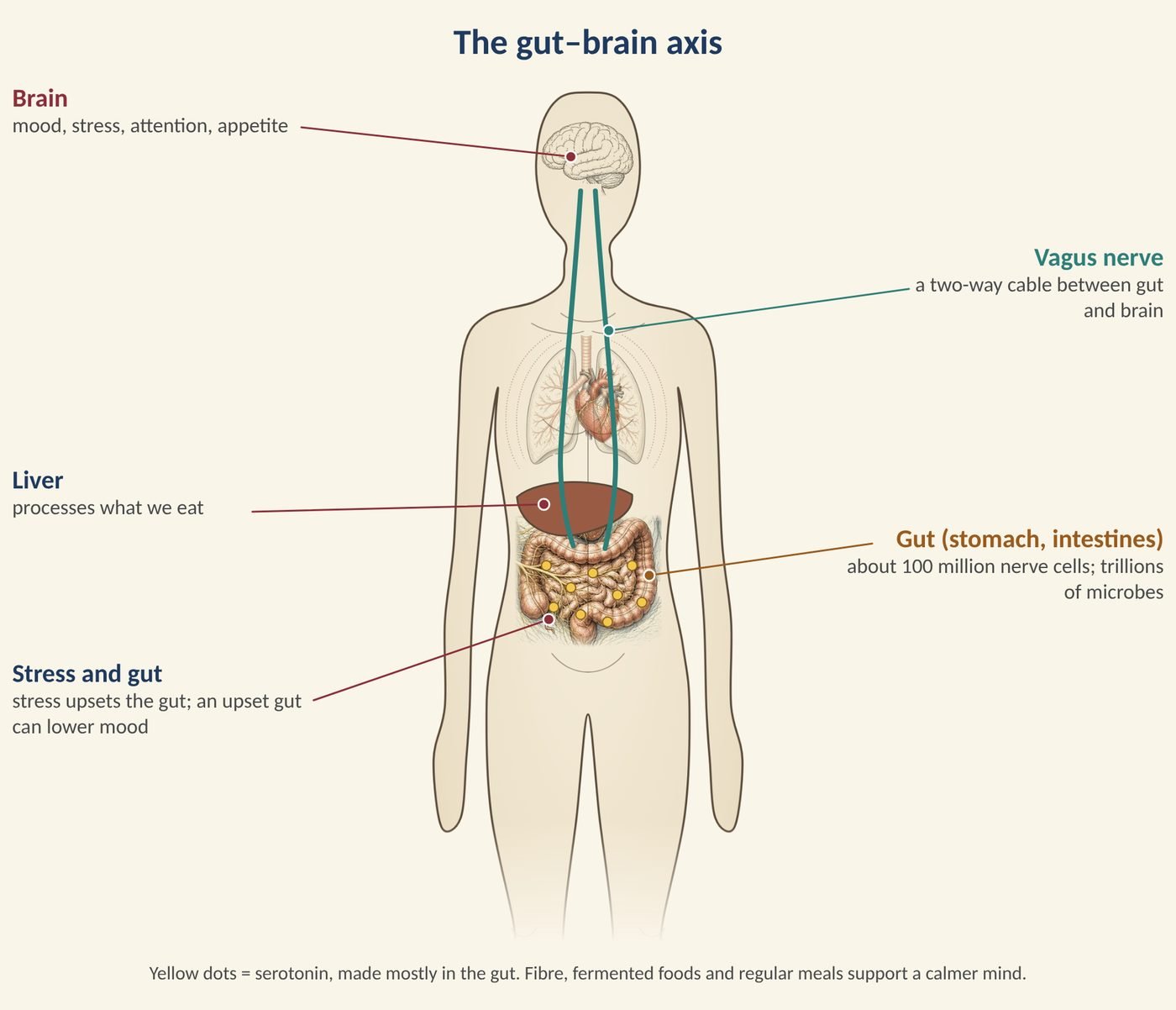
Figure 21.1 The gut–brain axis.
Probiotics may improve anxiety and depression in some people. Prebiotics (fibre) support gut health. Dysbiosis is linked to depression, anxiety, and autism in research. Intestinal permeability may contribute to inflammation and mental-health issues.
Support: fermented foods (yogurt, kefir, sauerkraut, kimchi); high-fibre diet; limit processed foods and sugar; consider probiotics after advice.
Chronic low-grade inflammation is linked to depression. Markers (CRP, IL-6, TNF-alpha) are often elevated. Inflammation can affect neurotransmitter function and brain plasticity. Anti-inflammatory approaches: omega-3, antioxidant-rich diet, exercise, stress reduction, sleep, limiting processed food and sugar.
21.8 Practical recommendations
Get comprehensive blood work: thyroid panel (TSH, Free T3, Free T4); vitamin D, B12, folate; iron studies (ferritin, iron, TIBC); magnesium (RBC magnesium more accurate); blood sugar (fasting glucose, HbA1c); inflammatory markers if indicated.
Eat a balanced diet: whole foods, vegetables, fruits; quality protein at each meal; healthy fats; complex carbohydrates; limit processed foods and sugar.
Consider supplements only after testing and consultation: vitamin D3 if deficient; B-complex especially B12 and folate; magnesium glycinate; omega-3; probiotics.
Support gut health; manage stress; regular exercise; adequate sleep; limit alcohol and caffeine.
21.9 Physical conditions that can look like mental illness
A good doctor always considers whether a body problem may be involved. Some examples:
- Thyroid disease, anaemia, or low vitamin B12 or D can cause tiredness and low mood.
- Infections, especially in older adults, can cause sudden confusion.
- Brain tumors, head injuries, and strokes can change personality or mood.
- Some medicines, including certain steroids and blood pressure drugs, can affect mood.
- Alcohol, cannabis, stimulants, and other drugs can cause or worsen anxiety, depression, and psychosis.
- Sleep apnea can cause tiredness, poor concentration, and depression.
Never try to diagnose yourself from a list. Instead, bring physical and mental symptoms together when you see a doctor.
21.10 One companion verse
Reflection activity
- Have you had recent blood work? What were your levels?
- How is your diet supporting your brain chemistry?
- Are you getting enough sunlight for vitamin D?
- How is your gut health? Any digestive issues?
- What one change could you make this week to support your body chemistry?
This book is for education and general awareness. It does not replace diagnosis or treatment by a qualified professional. If anyone is in danger, contact your local emergency services.