
Transduction before mood
A sense is a converter. Mood is what the converter feeds.
19.1 Overview
The five senses are sophisticated biological systems that convert external stimuli into neural signals the brain can process. Each sense has specialised receptors, neural pathways, and brain regions dedicated to processing specific information.
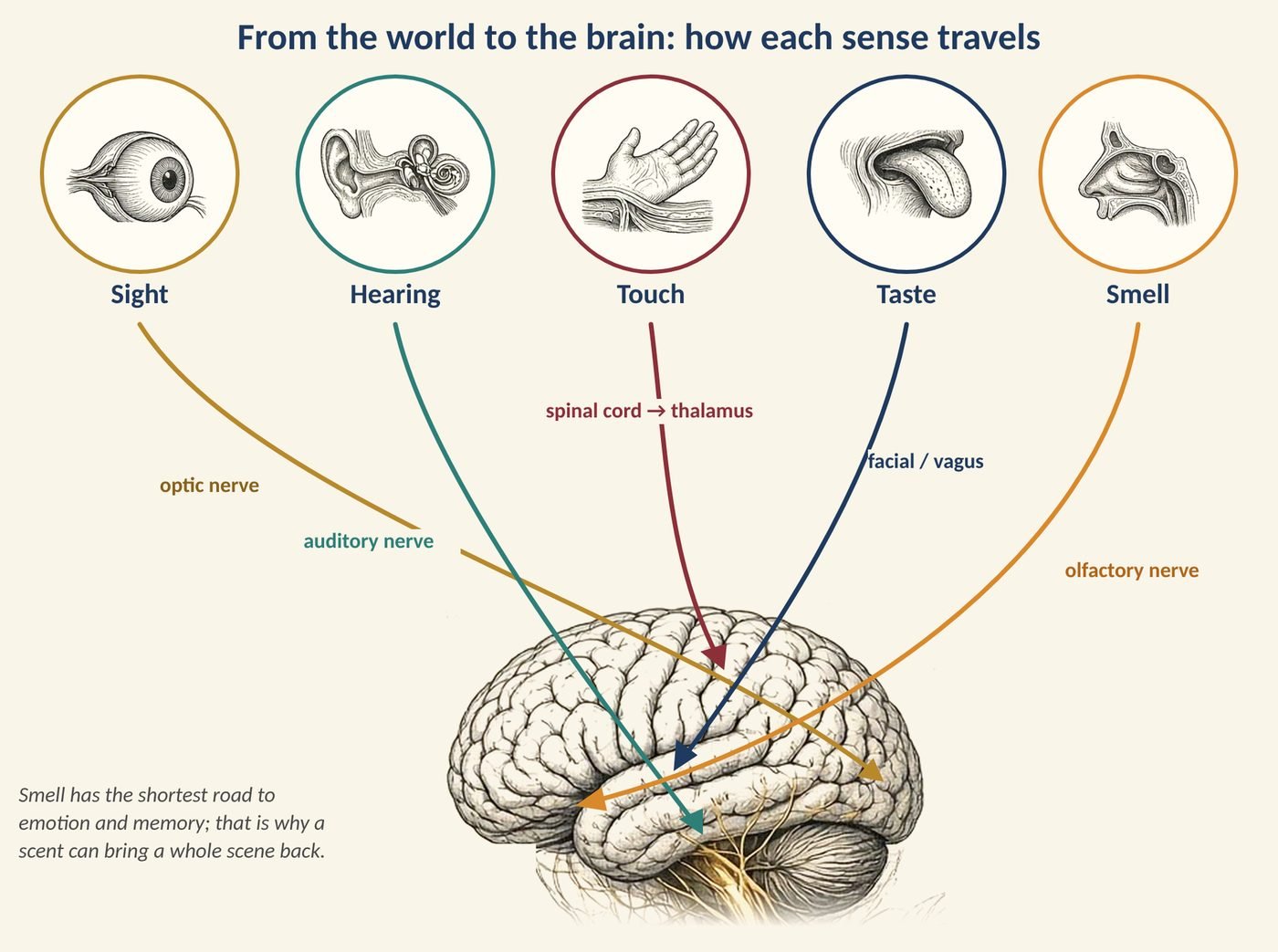
Figure 19.1 How each sense travels from the world to the brain.
The modern sensory map: sensation is transduction; perception is the brain's model. Sight: photons → retina → occipital lobe. Hearing: air pressure → cochlea → temporal lobe. Touch: mechanical force → skin → parietal cortex. Taste: chemicals → taste buds → insula. Smell: airborne chemicals → olfactory epithelium → limbic paths. Additional senses: proprioception, vestibular sense, interoception.
19.2 Sight (vision)
How it works
- Light enters the eye through the cornea and pupil.
- The lens focuses light onto the retina at the back of the eye.
- Photoreceptors activate: rods detect light and dark and work in low light; cones detect colour (red, green, blue) and work in bright light.
- Retinal cells convert light to electrical signals.
- The optic nerve carries signals to the brain.
- Visual cortex (occipital lobe) processes the information into images.
Key structures: cornea, pupil, lens, retina, optic nerve; occipital lobe.
Mental health connection
- Vision loss can lead to depression, anxiety, isolation.
- Seasonal changes in light affect mood (Seasonal Affective Disorder).
- Visual hallucinations can occur in certain psychiatric conditions.
- Eye contact and facial recognition are important for social connection.
19.3 Hearing (auditory)
How it works
- Sound waves enter the outer ear (pinna and ear canal).
- The eardrum vibrates.
- Middle-ear bones amplify vibrations (malleus, incus, stapes).
- The inner ear (cochlea) converts vibrations to neural signals.
- Hair cells in the cochlea detect different frequencies.
- The auditory nerve carries signals to the brain.
- Auditory cortex (temporal lobe) processes sound.
Key structures: outer ear, eardrum, middle-ear bones, cochlea; auditory nerve; temporal lobe.
Mental health connection
- Hearing loss is linked to social isolation, depression, and cognitive decline.
- Auditory hallucinations occur in schizophrenia and other psychotic disorders.
- Music therapy can improve mood and reduce anxiety.
- Tinnitus (ringing in the ears) is associated with anxiety and depression.
19.4 Smell (olfactory)
How it works
- Odor molecules enter the nose during breathing.
- Olfactory receptors detect specific chemical compounds.
- The olfactory bulb processes initial information.
- Signals travel directly to the limbic system (amygdala, hippocampus).
- Orbitofrontal cortex identifies and interprets smells.
Key structures: olfactory epithelium, olfactory bulb, limbic system, orbitofrontal cortex.
Unique feature: smell is the only sense that bypasses the thalamus and goes directly to the limbic system (emotion and memory centre). This is why smells can trigger powerful emotional memories instantly.
Mental health connection
- Loss of smell (anosmia) is linked to depression.
- Smell disturbances occur in schizophrenia, depression, and Alzheimer's.
- Aromatherapy can reduce anxiety and improve mood.
- Traumatic memories are often triggered by specific smells.
Clinic note. If a smell means last year's fire, work with a trauma-informed helper. Do not force the soap.
19.5 Taste (gustatory)
How it works
- Food chemicals dissolve in saliva.
- Taste buds detect five basic tastes: sweet, sour, salty, bitter, umami (savory).
- Taste receptor cells send signals via cranial nerves.
- Signals travel to the brainstem, then the thalamus.
- Insula and frontal operculum process taste information.
Key structures: taste buds; cranial nerves (facial, glossopharyngeal, vagus); insula; frontal operculum.
Mental health connection
- Taste changes are common in depression (food seems tasteless).
- Eating disorders involve altered taste perception and reward processing.
- Medications can cause taste disturbances affecting nutrition.
- Comfort foods activate reward pathways (dopamine release).
19.6 Touch (somatosensory)
How it works
- Sensory receptors in skin detect pressure, vibration, temperature, and pain. Different receptors for different sensations.
- Signals travel via peripheral nerves to the spinal cord.
- The spinal cord sends signals to the brainstem and thalamus.
- Somatosensory cortex (parietal lobe) processes touch.
- The brain creates a map of body sensations (homunculus).
Key structures: skin receptors, peripheral nerves, spinal cord; thalamus; somatosensory cortex.
Mental health connection
- Touch deprivation is linked to anxiety, depression, and developmental issues.
- Self-harm involves altered pain perception — this is a reason to seek care, not a method.
- Mindfulness practices use body awareness and touch.
- Therapeutic touch can reduce stress and anxiety.
- Chronic pain is strongly associated with depression and anxiety.
19.7 Sensory integration
The brain does not process senses in isolation. Multisensory integration combines information from multiple senses.
- Example: eating involves taste, smell, sight, touch (texture), and even sound (crunch).
- Brain regions: superior colliculus and association cortices integrate sensory information.
- Mental health: sensory processing issues in autism, schizophrenia, PTSD.
In brief: the Indic map pairs space with hearing, air with touch, fire with sight, water with taste, earth with smell. Combinations (fire + air as racing thought) are a sensory diet language, not a diagnosis. The full table belongs in Chapter 20.
19.8 A short clinic story
19.9 One companion verse
Reflection activity
- Close your eyes and identify 5 different sounds around you.
- Notice your breath — the sensation of air moving in and out.
- Recall a smell that triggers a strong memory — notice the emotions.
- Pay attention to textures you are touching right now.
- Observe how senses work together in daily activities.
This book is for education and general awareness. It does not replace diagnosis or treatment by a qualified professional. If anyone is in danger, contact your local emergency services.