
Four words, one inner weather
Feeling is allowed. Being overthrown for weeks is a different problem.
5.1 Definitions
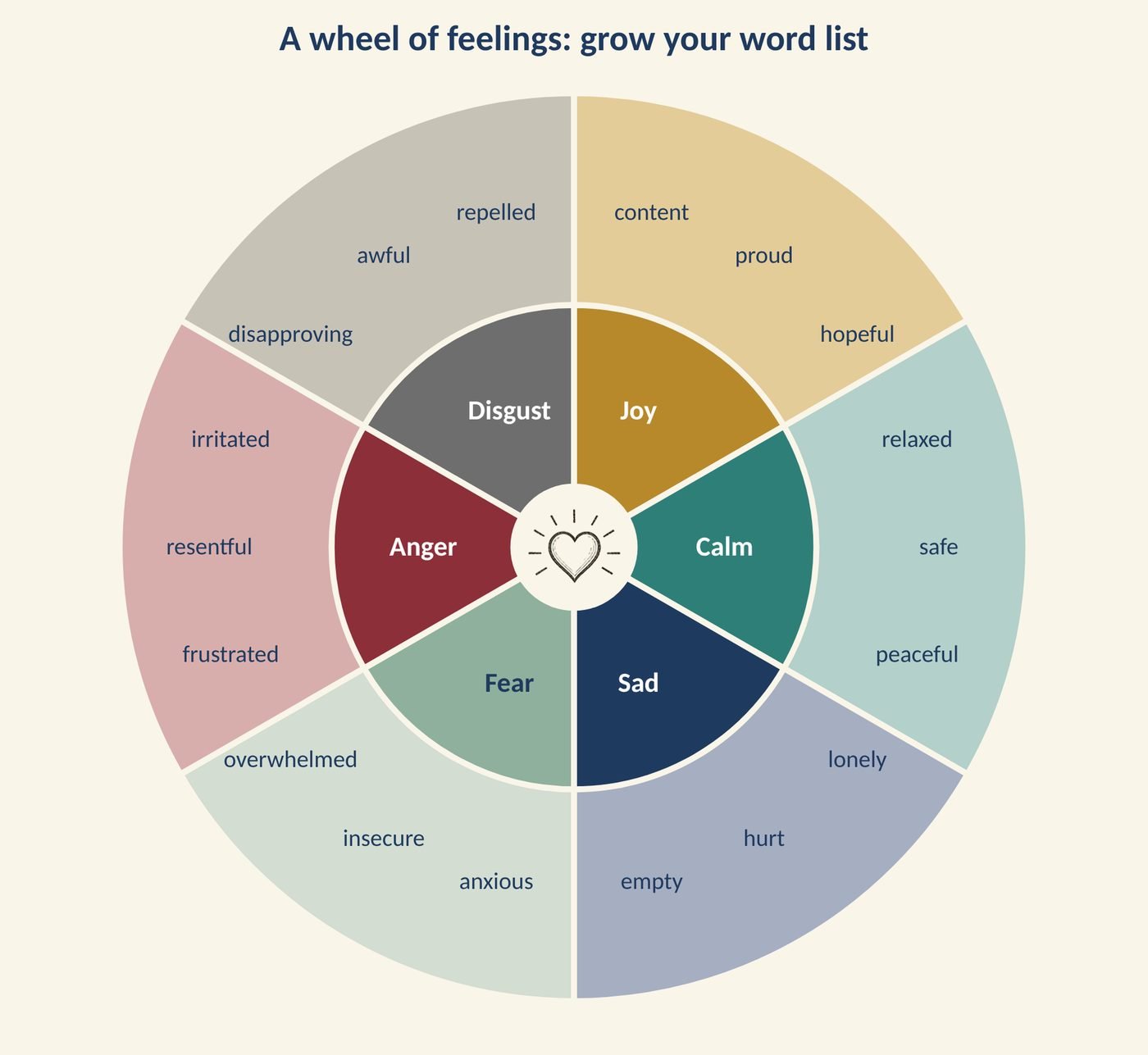
Figure 5.1 A wheel of feelings: a bigger word list makes feelings easier to manage.
Emotions
- Automatic, rapid responses to situations.
- Universal across cultures (basic emotions).
- Involve physical changes (heart rate, facial expressions).
- Examples: fear, anger, joy, sadness, surprise, disgust.
- Originate in the limbic system (especially the amygdala).
Feelings
- Conscious experience and interpretation of emotions.
- More personal and subjective than emotions.
- Influenced by past experiences and beliefs.
- Examples: feeling loved, feeling rejected, feeling accomplished.
- Involve cortical (thinking) brain regions.
Thoughts
- Mental processes, beliefs, interpretations.
- Can be conscious or automatic.
- Influence how we feel and behave.
- Can be realistic or distorted.
- Can be changed through therapy and practice.
Moods
- Longer-lasting emotional states (hours to days).
- Less intense but more persistent than emotions.
- Influence how we interpret events.
- Examples: irritable mood, depressed mood, elevated mood.
- Affected by sleep, hormones, stress, health.
Affect, mood and personality
|
Word |
Working sense |
|---|---|
|
Emotion |
Short bodily-and-meaning event |
|
Feeling |
Conscious experience |
|
Mood |
Longer weather |
|
Affect |
Umbrella term |
|
Personality |
Stable pattern of thinking, feeling, acting |
|
Character |
Personality plus ethics |
|
Duty |
Role-bound ought |
Working set of emotions: fear, anger, sadness, joy, disgust, surprise, shame, guilt, love / care.
The Big Five: Openness, Conscientiousness, Extraversion, Agreeableness, Neuroticism.
Clinic note. A sad afternoon is an emotion. Three empty weeks with no pleasure is a mood problem that may be depression — Chapter 9. A twenty-year style of relating is personality — Chapter 11. Do not treat all four with the same sentence.
5.2 The cognitive triangle
THOUGHTS ↔ FEELINGS ↔ BEHAVIOURS
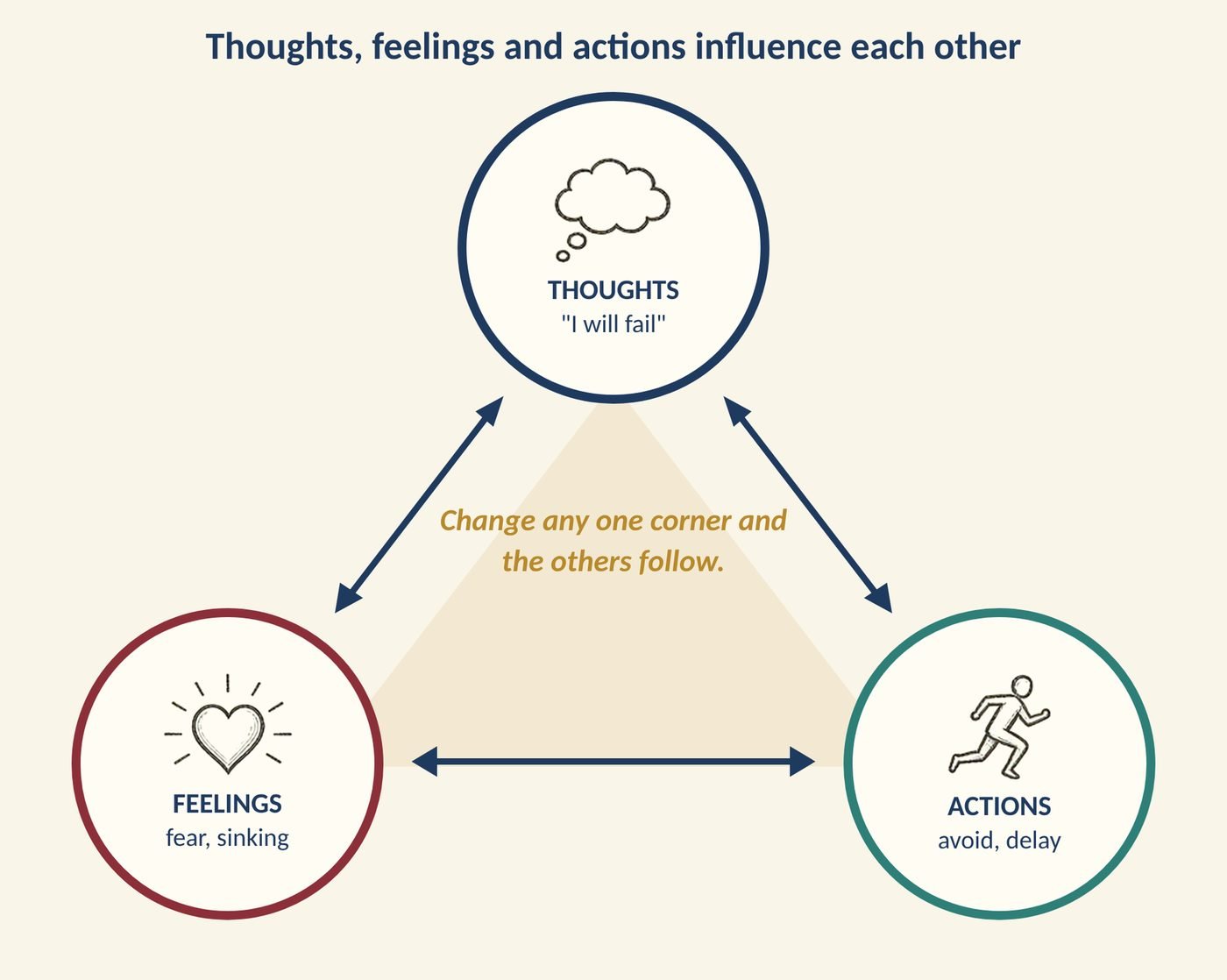
Figure 5.2 Thoughts, feelings and actions influence each other.
These three are interconnected:
- Thoughts influence feelings: "I'm a failure" → sadness, shame.
- Feelings influence thoughts: sadness → "Nothing matters."
- Both influence behaviours: sadness + negative thoughts → withdrawal, isolation.
- Behaviours influence thoughts and feelings: isolation → more negative thoughts → deeper sadness.
This is the foundation of Cognitive Behavioural Therapy (CBT): by changing negative thought patterns, we can improve emotions and actions. By changing behaviours (like exercise, socializing), we can improve thoughts and feelings.
Example. Sunday night, a person thinks "the week will crush me," feels tight in the chest, cancels a walk, then believes the cancelled walk proves they are finished. One changed behaviour — a ten-minute walk anyway — often changes the next thought more cheaply than an argument with the first thought.
5.3 Common cognitive distortions
All-or-nothing thinking
Seeing things in black and white categories. Example: "If I'm not perfect, I'm a failure."
Overgeneralization
Making broad conclusions from single events. Example: "I failed once, so I'll always fail."
Mental filter
Focusing only on negative details. Example: ignoring 9 compliments, dwelling on 1 criticism.
Discounting the positive
Rejecting positive experiences as "not counting." Example: "They only said that to be nice."
Jumping to conclusions
Mind reading: assuming you know what others think. Fortune telling: predicting things will go badly.
Magnification or minimization
Blowing things out of proportion or shrinking them. Example: "This mistake is catastrophic" or "My achievements don't matter."
Emotional reasoning
Believing feelings reflect reality. Example: "I feel stupid, so I must be stupid."
"Should" statements
Criticizing yourself or others with "shoulds." Example: "I should never make mistakes."
Labeling
Assigning global negative labels. Example: "I'm a loser" instead of "I made a mistake."
Personalization
Taking things personally that aren't about you. Example: "My friend is quiet, so they must be angry with me."
Write the sentence down. Ask: what is the evidence for, what is the evidence against, what would I say to a friend? Distortion is speed, not destiny.
5.4 Emotional regulation skills
Recognize and name emotions
- Practice identifying what you're feeling.
- Use specific emotion words (not just "good" or "bad").
- Notice physical sensations associated with emotions.
Accept emotions without judgment
- All emotions are valid, even uncomfortable ones.
- Emotions are messengers, not enemies.
- Avoid judging yourself for feeling.
Use healthy coping strategies
- Deep breathing and relaxation.
- Exercise and movement.
- Talking to supportive people.
- Creative expression (writing, art, music).
- Mindfulness and meditation.
Practice mindfulness and grounding
- Focus on the present moment.
- 5-4-3-2-1 grounding technique: 5 things you see, 4 you feel, 3 you hear, 2 you smell, 1 you taste.
- Observe emotions without being overwhelmed.
Seek support when needed
- Talk to trusted friends or family.
- Consider professional help.
- Join support groups.
- You don't have to handle everything alone.
5.5 Healthy vs unhealthy coping
|
Healthy |
Unhealthy |
|---|---|
|
Exercise |
Substance abuse |
|
Talking to friends |
Self-harm |
|
Journaling |
Isolation |
|
Meditation |
Aggression |
|
Hobbies |
Denial and avoidance |
|
Adequate sleep |
Overworking |
|
Professional therapy |
Disordered eating |
Clinic note. Unhealthy coping often works for an hour. That is why it lasts. Healthy coping often works for a week. That is why it feels weaker on day one. Self-harm and substances need a professional door, not a willpower lecture.
5.6 Emotional awareness: step one
You cannot manage what you cannot name. Many people only notice “I feel bad.” Naming the emotion more precisely (for example, “I feel disappointed and a little embarrassed”) has a calming effect on the brain, as research on “affect labelling” shows.
Build your emotion vocabulary
Instead of “bad,” try: anxious, nervous, overwhelmed, irritated, resentful, hurt, lonely, empty, discouraged, ashamed, jealous, guilty. Instead of “good,” try: calm, grateful, proud, relieved, hopeful, content, excited, playful, connected.
Notice where you feel it
Pause and scan your body. Tight chest? Clenched jaw? Heavy stomach? Body clues often come before words.
5.7 The ABC model: how thoughts shape feelings
Cognitive therapy teaches a simple model.
- A: Activating event: What happened? (“My friend didn’t reply to my message.”)
- B: Belief: What did I tell myself? (“She is ignoring me; I must have upset her.”)
- C: Consequence: How did I feel and act? (Sad, anxious; I sent three more messages.)
The event alone does not produce the feeling; the interpretation does. A different belief (“She’s probably busy”) produces a different feeling.
5.8 The thought record
A thought record is a pen-and-paper tool that turns these ideas into action. Draw columns for:
- Situation: what happened?
- Emotion: what did I feel, and how strong (0 to 100)?
- Automatic thought: what went through my mind?
- Evidence for the thought
- Evidence against the thought
- Balanced thought: a fairer, more realistic view
- Emotion now: how strong is the feeling (0 to 100)?
With practice, you will start doing this in your head. The goal is not positive thinking but accurate thinking.
5.9 Mindfulness
Mindfulness means paying attention to the present moment, on purpose, with openness and without judgement. It is not about emptying the mind or feeling calm all the time. Studies show that regular practice lowers stress, reduces relapse in depression, and improves attention and emotional balance.
Simple practices
- Mindful breathing: sit comfortably, follow the sensation of the breath. When the mind wanders (it will), gently bring it back. Start with three to five minutes.
- Body scan: move attention slowly from your toes to your head, noticing sensations.
- Mindful walking: feel each step, the air, the sounds.
- Mindful eating: take the first three bites slowly, noticing taste and texture.
- Five senses check: name five things you see, four you touch, three you hear, two you smell, one you taste.
- Everyday mindfulness: brush your teeth, wash dishes, or drink tea with full attention.
5.10 Self-compassion
Many people treat themselves much more harshly than they would treat a friend. Psychologist Kristin Neff describes three parts of self-compassion:
- Self-kindness: speaking to yourself with warmth, not harsh criticism.
- Common humanity: remembering that failure and pain are shared by all people.
- Mindfulness: noticing painful feelings without exaggerating or ignoring them.
Research finds that self-compassion does not lower motivation. People who are kind to themselves are more likely to try again after failure and are less anxious and depressed.
Ask: “What would I say to a close friend in this situation?” Then say that to yourself.
5.11 Gratitude, meaning, and strengths
Positive psychology, the study of what makes life go well, offers evidence-based habits:
- Gratitude: each evening, write three things that went well and why. This simple exercise has been shown to raise well-being over weeks.
- Acts of kindness: doing something kind for someone else lifts mood for both.
- Savoring: pause to enjoy good moments for 30 seconds longer.
- Using your strengths: identify what you are good at (kindness, curiosity, honesty, humour, perseverance) and use it daily.
- Meaning and purpose: connect with values, faith, family, service, creativity, or causes that matter to you.
- Flow: absorbing activities that challenge your skills, such as music, sport, craft, and gardening, bring deep satisfaction.
5.12 Managing anger
Anger is natural, and it becomes a problem when it is too frequent, too intense, or leads to harm.
- Know your early signs: clenched jaw, hot face, faster heartbeat.
- Take a time-out: step away for 10 to 20 minutes.
- Cool your body: breathe slowly, drink water, walk.
- Think before speaking: ask what the anger is really about (hurt, fear, unfairness?).
- Use “I” statements: “I feel upset when plans change without notice,” not “You always…”
- Return to the conversation when calm, and focus on solving the problem.
- Seek help if anger leads to violence, fear in others, or regret you cannot control.
5.13 Handling rumination and worry
Rumination is going over the same thoughts again and again, usually about the past (“Why did I say that?”). Worry is the same about the future. Neither solves anything. Try:
- Setting a limited “worry time” each day
- Writing it down, then closing the notebook
- Moving your attention to a task, a person, or an activity
- Asking “Is this useful?” and “What is one small step?”
- Practicing mindfulness to notice and release thoughts
Reflection activity
- Track your emotions for one week. What triggers them?
- Identify your common cognitive distortions. Which ones do you use most?
- Practice reframing one negative thought each day.
- List 5 healthy coping strategies that work for you.
- Who are your support people? Make a list of people you can talk to.
Volume 1 summary
Volume 1 established the foundations:
- Chapter 1: Mental health is universal, exists on a continuum, and can improve.
- Chapter 2: Different professionals (psychologists, psychiatrists, counsellors) provide different types of help.
- Chapter 3: Brain structure (frontal, parietal, temporal, occipital lobes, limbic system, cerebellum, brainstem) affects mental functions.
- Chapter 4: Neurotransmitters (serotonin, dopamine, GABA, and others) and hormones (cortisol, thyroid, estrogen, testosterone) significantly impact mood and behaviour.
- Chapter 5: Thoughts, feelings and behaviours are interconnected; distortions can be identified and changed.
These foundations prepare us to understand senses, stress, and specific mental health conditions in Volume 2.
5.14 Two stories
5.15 One companion verse
Reflection
- Which distortion from this chapter is your household's favourite?
- Name one emotion you felt today in a specific word — not "fine."
- Which healthy coping item will you keep this week even if the rest fails?
This book is for education and general awareness. It does not replace diagnosis or treatment by a qualified professional. If anyone is in danger, contact your local emergency services.