
Love without police energy
Food, a booked OPD, and one person who also sleeps. Two carers beat one hero.

17.1 Why family support matters
Family members, partners, and close friends often play a crucial role in recovery. They provide practical help, emotional support, encouragement for treatment, and a sense of belonging.
Supporting someone with mental illness can be emotionally demanding. Families need information, skills, and self-care to help effectively without burning out.
17.2 Understanding the person's experience
Before trying to fix the person, it helps to understand:
- Mental disorders are real health conditions, not laziness, weakness, or possession.
- The person is likely suffering, not choosing to be difficult.
- Symptoms (low mood, anxiety, anger, withdrawal, unusual beliefs) are part of the illness, not the person's true character.
- Recovery is often gradual, with ups and downs.
Approaching with empathy, patience, and respect reduces conflict and increases trust.
17.3 How to talk
Time and place
Pick a calm, private time when both of you are relatively relaxed. Avoid sensitive issues during arguments, or when the person is very agitated, intoxicated, or exhausted.
Helpful phrases
- I have noticed you seem very stressed, sad, or tired lately. I care about you.
- You are not alone; we can face this together.
- I may not fully understand, but I want to listen.
- Would you be open to talking to a doctor or counsellor? I can go with you.
Unhelpful phrases to avoid
- Just snap out of it.
- Others have bigger problems; you are overreacting.
- This is all in your mind; stop thinking too much.
- If you prayed more / tried harder, you would be fine.
Such statements can increase guilt, shame, and isolation.
Listening
- Give full attention; put away the phone.
- Let them speak without interrupting.
- Reflect back: it sounds like you feel overwhelmed and hopeless.
- Validate: given what you have been through, it makes sense that you feel this way.
- Avoid rushing to solutions; sometimes people need to be heard more than advised.
17.4 Encouraging professional help
Many people resist seeking help due to stigma, fear, or lack of insight.
- Share simple, factual information about mental health and treatment.
- Normalise help-seeking: many people go through this; talking to a professional can really help.
- Offer practical support: find a qualified professional; accompany them; assist with transport, childcare, time off work.
- Respect autonomy: avoid forcing unless there is immediate risk of harm. If they refuse, keep the door open.
In severe illness with lack of insight (psychosis, severe mania), family may need to take more initiative, ideally with guidance from a mental-health professional.
17.5 Supporting treatment at home
- Medicines: help them take as prescribed (pill box, reminders); do not change or stop without the doctor's advice; observe and report side effects.
- Therapy: encourage attendance and practice of skills; do not undermine the therapist's work.
- Routine: support regular sleep, meals, and activity; gently encourage, do not force.
- Stress reduction: reduce unnecessary conflicts and criticism; create a calm, predictable environment.
- Monitoring: watch for relapse signs (sleep changes, mood swings, withdrawal, unusual beliefs); contact the treating professional early.
17.6 Handling crises at home
If the person becomes severely agitated, psychotic, suicidal, or violent:
- Stay calm: speak softly, slowly, respectfully. Do not argue about delusions or hallucinations; focus on feelings and safety.
- Ensure safety: remove dangerous objects if possible; keep a safe distance if the person is aggressive; do not physically restrain unless absolutely necessary and safe.
- Seek help: contact the treating psychiatrist urgently. If there is immediate risk of harm, emergency services or the nearest hospital. Inform other trusted family or friends.
- After the crisis: debrief gently when calm; review triggers; consider a crisis plan (who to call, which hospital, which medicines).
17.7 Reducing stigma within the family
Families can unintentionally reinforce stigma by blaming the person, blaming themselves excessively, hiding the condition from everyone, or using derogatory labels.
Helpful approaches: respectful, person-first language (a person with depression, not a depressive); educate all family members; share information selectively but honestly with trusted relatives; connect with family support groups.
17.8 Special considerations
Children and adolescents
Involve parents or guardians in treatment where appropriate; coordinate with school counsellors or teachers; maintain routines; watch for bullying, academic pressure, and social issues.
Older adults
Be alert to depression, anxiety, and cognitive changes; ensure medical issues are addressed; provide companionship and meaningful activities; support caregivers with respite and information.
Substance use
Avoid enabling (giving money that may be used for substances, covering up consequences). Encourage treatment. Set clear, compassionate boundaries. Seek specialised support (de-addiction centres, family support groups).
17.9 Caring for the caregiver
Signs of caregiver burnout: constant fatigue; irritability, anger, or resentment; sleep problems; neglecting one's own health and social life; feeling hopeless or trapped.
Self-care: regular breaks; share responsibilities; maintain your own health; stay connected with friends and support groups; consider your own counselling. Caring for yourself is not selfish; it enables you to care better for others.
17.10 The ALGEE action plan (Mental Health First Aid)
The widely used Mental Health First Aid course teaches a simple five-step guide:
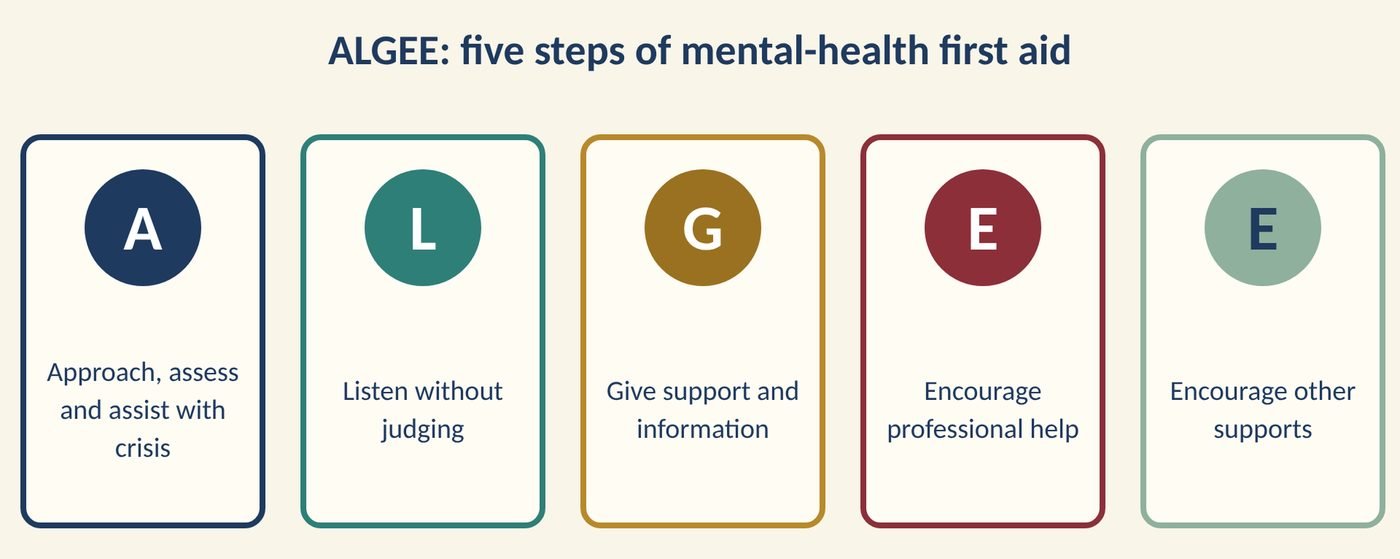
Figure 17.1 ALGEE: five steps of mental-health first aid.
|
Step |
What to do |
|---|---|
|
Approach, assess, assist with any crisis |
Start a conversation; check for suicidal thoughts or danger |
|
Listen non-judgmentally |
Hear them out with respect |
|
Give support and information |
Reassure, share information about the condition and treatment |
|
Encourage professional help |
Suggest a doctor or counsellor; offer to help book or attend |
|
Encourage other supports |
Family, friends, peer groups, self-help, healthy routines |
17.11 A simple story
17.12 One companion verse
Reflection activity
- Think of someone in your circle who may be struggling. What signs have you noticed?
- What is one supportive action you could take this week?
- If you are a caregiver, what is one thing you could do this week for your own health?
This book is for education and general awareness. It does not replace diagnosis or treatment by a qualified professional. If anyone is in danger, contact your local emergency services.