
Cycles, reality-testing, and long styles
A name can open a clinic. It can also stigmatize. Use it as a door, not a sentence.
11.1 Why these conditions need careful understanding
Mood disorders, psychotic disorders, and personality-related conditions are among the more severe and complex mental-health conditions. They can significantly affect thinking, emotions, behaviour, relationships, and daily life.
Stigma and misunderstanding are common. Many people label those affected as "mad", "dangerous", or "hopeless". In reality, with proper diagnosis, treatment, and support, many people recover substantially and live meaningful lives.
11.2 Mood disorders beyond depression
Mood disorders involve significant disturbances in mood that are more severe or persistent than ordinary ups and downs.
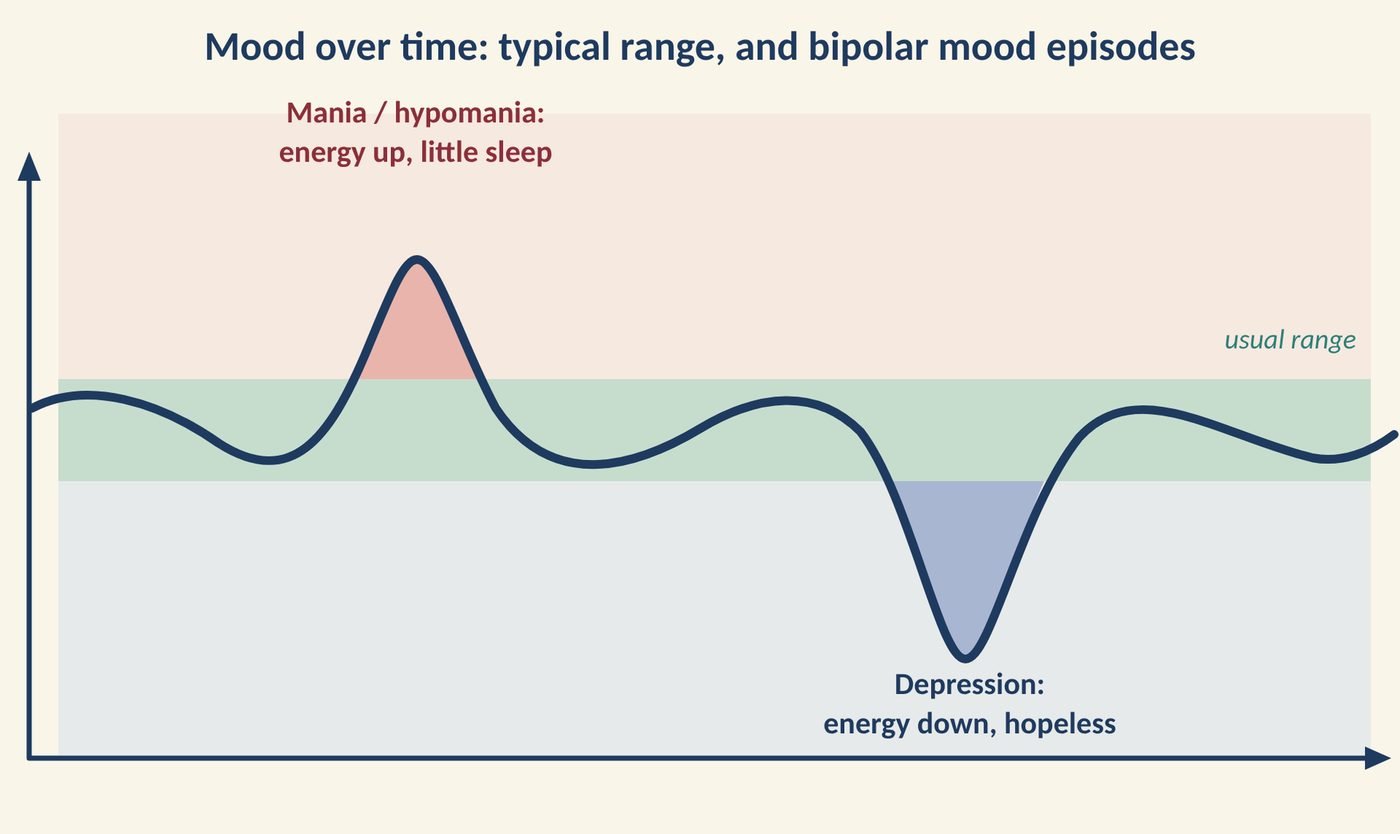
Figure 11.1 Typical mood range and bipolar mood episodes.
Bipolar disorder
Bipolar disorder is characterised by episodes of depression (low mood, loss of interest, fatigue, sleep and appetite changes, guilt, possible suicidal thoughts) and mania or hypomania (abnormally elevated, expansive, or irritable mood with increased energy and activity).
Manic episode symptoms may include:
- Decreased need for sleep (feeling rested after very little sleep).
- Inflated self-esteem or grandiosity.
- More talkative than usual or pressured speech.
- Racing thoughts.
- Distractibility.
- Increased goal-directed activity or agitation.
- Risky behaviours (excessive spending, reckless driving, unsafe sex, impulsive business decisions).
Hypomania is a milder form of mania that does not cause severe impairment or psychosis but is still a clear change from usual behaviour.
Bipolar disorder is not simply "mood swings"; it involves distinct episodes lasting days to weeks. It usually requires long-term treatment with mood stabilisers (for example, lithium, valproate) and/or other medicines under a psychiatrist.
Cyclothymic disorder
Chronic fluctuation of mood with numerous periods of hypomanic symptoms and depressive symptoms that do not meet full criteria for bipolar I or II. Lasts at least two years (one year in children/adolescents). Can still cause significant distress or impairment.
Other mood disorders
- Premenstrual dysphoric disorder (PMDD): severe mood symptoms linked to the menstrual cycle.
- Substance/medication-induced mood disorder.
- Mood disorder due to another medical condition (for example, thyroid disease, neurological conditions).
Accurate diagnosis is essential because treatment differs from unipolar depression.
11.3 Psychotic disorders
Psychosis refers to a loss of contact with reality. It is a syndrome, not a single diagnosis, and can occur in several conditions (schizophrenia, bipolar disorder, severe depression, substance use, medical illness).
Delusions
Fixed false beliefs not shared by others in the person's culture and not changed by evidence. Examples: persecutory; grandiose; referential (TV sending secret messages); somatic ("My organs are rotting" despite medical reassurance).
Hallucinations
Perceptions without external stimuli. Auditory (hearing voices — most common in schizophrenia; voices may comment, argue, or command); visual; tactile, olfactory, gustatory.
Disorganised thinking and speech
Difficulty organising thoughts; speech that is hard to follow (loose associations, tangentiality, word salad in severe cases).
Disorganised or abnormal behaviour
Unpredictable agitation; odd or inappropriate behaviour; difficulty performing daily activities; catatonia in some cases (marked reduction in movement or speech, or unusual postures).
Negative symptoms
- Reduced emotional expression (flat affect).
- Decreased speech (alogia).
- Lack of motivation (avolition).
- Social withdrawal.
- Loss of interest or pleasure.
These can be particularly disabling and are often harder to treat.
11.4 Schizophrenia and related disorders
Schizophrenia is a chronic mental disorder characterised by two or more of: delusions; hallucinations; disorganised speech; disorganised or catatonic behaviour; negative symptoms — for a significant portion of a one-month period — with significant impairment in work, relationships, or self-care, and continuous signs for at least six months (including prodromal or residual phases).
Onset is often in late adolescence or early adulthood. It affects thinking, perception, emotions, and behaviour.
Important facts:
- Schizophrenia is not "split personality" (that is dissociative identity disorder, a different and rare condition).
- Most people with schizophrenia are not violent; they are more likely to be victims of violence or to harm themselves.
- With early and continuous treatment (antipsychotic medicines, psychosocial support, family education, rehabilitation), many people improve and lead meaningful lives.
Related disorders include schizoaffective disorder (features of both schizophrenia and a mood disorder) and other brief or substance-related psychotic presentations. A psychiatrist sorts these; a family argument does not.
11.5 Personality conditions
A personality disorder involves long-standing, inflexible patterns that deviate markedly from cultural expectations; cause distress or impairment; are stable and of long duration; and are not better explained by another mental disorder, substance use, or medical condition. Diagnosis is usually made in adulthood.
Cluster A (odd or eccentric)
- Paranoid: pervasive distrust and suspiciousness.
- Schizoid: detachment from social relationships; limited emotional expression.
- Schizotypal: discomfort in close relationships, cognitive or perceptual distortions, eccentric behaviour.
Cluster B (dramatic, emotional, or erratic)
- Antisocial: disregard for and violation of others' rights; deceitfulness, impulsivity, lack of remorse (often linked to conduct disorder in childhood).
- Borderline (BPD): instability in relationships, self-image, and emotions; impulsivity; intense fear of abandonment; self-harm in some people.
- Histrionic: excessive emotionality and attention-seeking.
- Narcissistic: grandiosity, need for admiration, lack of empathy.
Cluster C (anxious or fearful)
- Avoidant: social inhibition, feelings of inadequacy, hypersensitivity to criticism.
- Dependent: excessive need to be taken care of; submissive and clinging; fear of separation.
- Obsessive-compulsive personality disorder (OCPD): preoccupation with orderliness, perfectionism, and control (different from OCD).
Personality disorders exist on a spectrum; not everyone fits neatly into one category. Many people improve over time, especially with therapy (for example, DBT for BPD). Labels should be used carefully to avoid stigma; focus is on understanding patterns and supporting change.
11.6 Causes
- Biological: genetic vulnerability; brain circuit and neurotransmitter differences (dopamine, serotonin, glutamate, GABA); hormonal and medical factors.
- Psychological: early attachment; trauma, abuse, neglect; temperament and coping styles.
- Social and environmental: chronic stress, poverty, discrimination; substance use (cannabis, stimulants, alcohol can worsen or trigger episodes in vulnerable people); urban stress, migration, social isolation.
No single cause explains all cases.
11.7 Treatment
Medicines
- Mood stabilisers: lithium, valproate, lamotrigine, and others for bipolar disorder.
- Antipsychotics: for schizophrenia, schizoaffective disorder, bipolar mania, and sometimes severe depression.
- Antidepressants: used carefully in mood disorders (often with mood stabilisers in bipolar disorder to avoid triggering mania).
Medication choice and monitoring must be done by a psychiatrist.
Psychotherapy and psychosocial support
Bipolar: psychoeducation; CBT; interpersonal and social rhythm therapy (regularising daily routines, especially sleep); family-focused therapy.
Psychotic disorders: CBT for psychosis; family intervention; social skills training, supported employment, rehabilitation.
Personality disorders: DBT for BPD (emotion regulation, distress tolerance, interpersonal effectiveness, mindfulness); schema therapy; mentalisation-based therapy; long-term supportive therapy.
Medication and therapy together often work better than either alone for severe conditions.
Lifestyle and family
- Regular sleep-wake cycle (critical in bipolar disorder).
- Avoiding alcohol and recreational drugs.
- Stress management and routine.
- Family education to reduce criticism, hostility, and over-involvement (high expressed emotion can increase relapse risk).
- Support groups for families and patients.
- Early intervention services for first-episode psychosis or bipolar disorder can improve long-term outcomes.
11.8 Stigma and human rights
People with severe mental disorders often face discrimination in education, employment, and housing; social exclusion; and human rights violations (neglect, abuse, inappropriate confinement).
WHO and other bodies emphasise: community-based care over long-term institutionalisation; respect for autonomy and informed consent; protection from abuse and coercion; integration into society with support.
11.9 When to seek urgent help
- Suicidal thoughts, plans, or attempts.
- Thoughts or commands to harm others.
- Cannot care for basic needs (not eating, drinking, or sleeping for days; severe neglect).
- Severe mania with risky behaviour.
- Severe psychosis with confusion, agitation, or inability to distinguish reality.
11.10 Bipolar disorder in more detail
Bipolar disorder affects around 1 to 2 percent of people. It often starts in the late teens or twenties.
Symptoms of mania
- Unusually high energy, elation, or irritability lasting at least a week
- Greatly reduced need for sleep without feeling tired
- Racing thoughts and rapid, pressured speech
- Inflated self-confidence or grand ideas
- Distractibility
- Risky behaviour: overspending, reckless driving, unsafe sex, impulsive investments
- In severe mania: delusions or hallucinations; hospital care is often needed
Types
- Bipolar I: at least one full manic episode. Depression usually occurs as well.
- Bipolar II: at least one hypomanic episode (milder, no hospitalisation needed) and at least one major depressive episode.
- Cyclothymia: milder mood swings over at least two years.
Why correct diagnosis matters
Many people with bipolar disorder are first diagnosed with depression, because they seek help during a low. Treating bipolar depression with an antidepressant alone can sometimes trigger mania. For this reason, doctors ask about past highs, family history, and sleep patterns, and it is important to tell them about any period of unusual energy.
Treatment
Bipolar disorder is a long-term condition, but with good treatment most people live full lives. Treatment includes mood-stabilising medicines (such as lithium, valproate, or certain antipsychotics), psychoeducation, regular routines, sleep protection, avoiding alcohol and drugs, and therapy. Spotting early warning signs, such as a need for less sleep, helps prevent relapse.
11.11 How to respond to a person experiencing psychosis
- Stay calm, speak gently and clearly.
- Do not argue about the content of hallucinations or delusions, and do not pretend to share them. You can say, “I know that this is real for you, but I don’t see or hear it. I want to help you feel safe.”
- Ask how you can help and focus on feelings: “That sounds frightening.”
- Keep the environment quiet and low in stimulation.
- Encourage professional help, and call emergency services if there is danger to the person or others.
- Stay with them if safe, and avoid confrontation or crowding.
11.12 Borderline personality disorder (BPD) in more detail
BPD affects roughly 1 to 2 percent of people. People with BPD feel emotions very intensely and can find it hard to calm down. Many have experienced trauma or neglect in childhood. Common features are fear of being abandoned, stormy relationships swinging between idealising and devaluing others, feeling empty, anger that is hard to control, impulsive actions, and self-harm or suicidal thoughts.
The outlook is hopeful. Research shows that most people with BPD improve substantially over time with proper treatment, and many no longer meet the criteria within several years.
Effective treatment
- Dialectical behaviour therapy (DBT): teaches four skill groups: mindfulness, distress tolerance, emotion regulation, and interpersonal effectiveness. It is the best-studied treatment.
- Mentalisation-based therapy (MBT), schema therapy, and transference-focused therapy: also have good evidence.
- Medicine: no medicine treats BPD itself, but medicines may help with depression, anxiety, or other symptoms.
- Crisis plans: clear steps and contacts for moments of intense distress.
11.13 Living with or supporting someone with a personality disorder
- Learn about the condition and avoid blaming.
- Communicate clearly and calmly; set kind, consistent boundaries.
- Take talk of self-harm or suicide seriously.
- Encourage treatment but avoid ultimatums that push the person away.
- Look after your own well-being, and seek support or family education programmes.
11.14 A simple story
11.15 One companion verse
Reflection activity
- Before this chapter, what did you think about bipolar disorder or schizophrenia? What is corrected now?
- How can families support rather than stigmatise? List two practical actions.
- If you noticed little sleep with high energy, grandiose beliefs, or hearing voices, what would be your first step toward help?
This book is for education and general awareness. It does not replace diagnosis or treatment by a qualified professional. If anyone is in danger, contact your local emergency services.