
Listening, speaking and staying connected
The good life is built with good relationships. — Robert Waldinger, director of the Harvard Study of Adult Development
34.1 Why connection matters
Humans evolved in groups. Our brains respond to social contact as a basic need, like food. Strong relationships:
- Lower stress hormones and blood pressure
- Provide comfort and practical help in a crisis
- Give life meaning and belonging
- Protect against depression and anxiety
- Are linked with longer life
Loneliness, on the other hand, is a risk factor for depression, heart disease, poor sleep, cognitive decline, and early death. Studies suggest that the harm of chronic loneliness rivals that of smoking heavily.
Loneliness versus being alone
Being alone is a state; loneliness is the painful feeling that the connection you have is less than the connection you need. You can feel lonely in a crowd or married, and feel content on your own. What counts is not the number of friends but the sense of being known and valued.
34.2 Different kinds of relationships
|
Type |
What it gives |
How to nurture it |
|---|---|---|
|
Family |
Roots, belonging, long history |
Regular contact, forgiveness, boundaries |
|
Close friends |
Trust, fun, honest support |
Time, listening, reliability |
|
Partner / spouse |
Intimacy, shared life |
Communication, appreciation, shared goals |
|
Colleagues |
Cooperation, belonging at work |
Respect, small kindnesses |
|
Community / neighbours |
Safety, shared identity |
Joining groups, volunteering |
|
Mentors and teachers |
Guidance and growth |
Gratitude, questions |
|
Pets |
Comfort, routine, responsibility |
Care and time |
Different kinds of connection meet different needs, so a mix is healthiest.
34.3 Attachment styles in adult relationships
Chapter 12 introduced attachment. Knowing your style can help you understand your patterns:
- Secure: comfortable with closeness and independence; communicates needs.
- Anxious: craves closeness, fears abandonment, may need frequent reassurance.
- Avoidant: values independence, uneasy with emotional closeness, may withdraw under stress.
- Fearful-avoidant (disorganised): wants closeness but fears it; mixed signals.
Styles are patterns, not labels for life. Insight, therapy, and a patient, trustworthy partner or friend can help anyone move toward “earned security.”
34.4 The building blocks of good communication
1. Listening
Most people listen to reply, not to understand. Real listening involves:
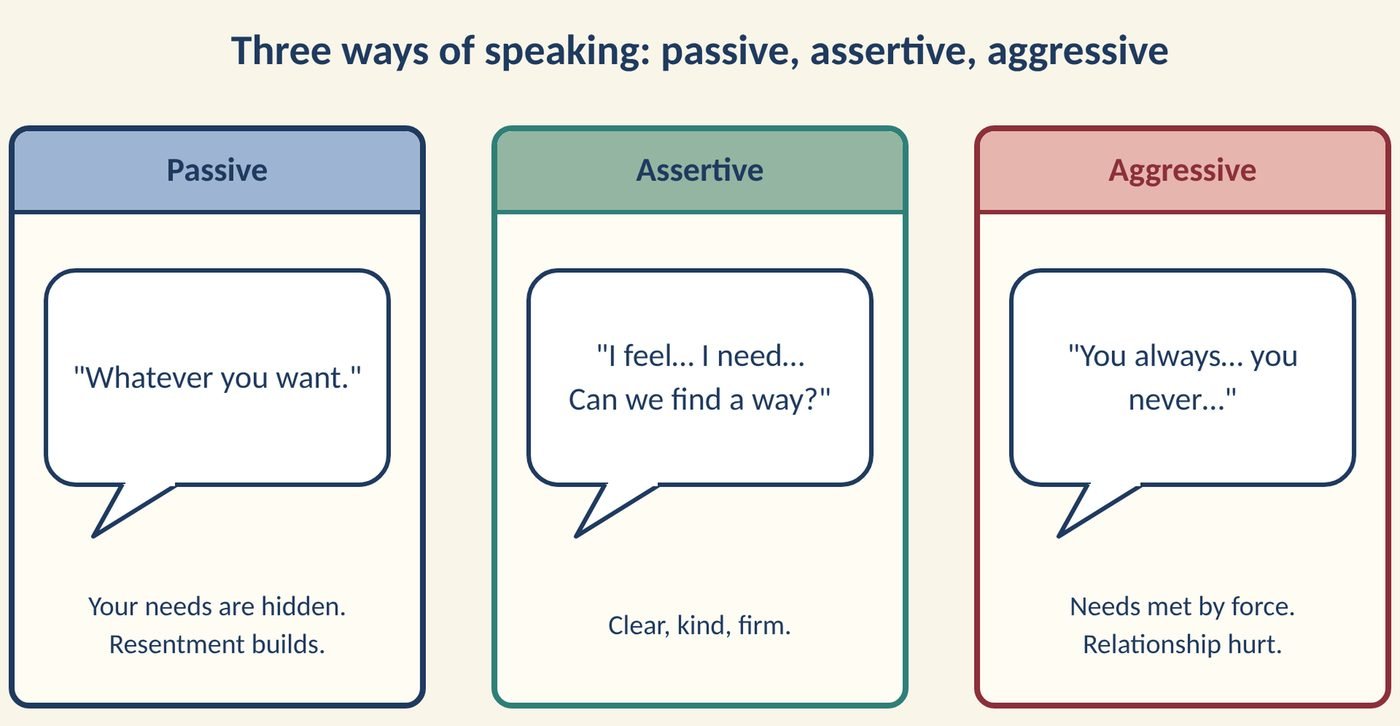
Figure 34.1 Passive, assertive and aggressive communication.
- Giving full attention: put the phone away and face the person.
- Not interrupting.
- Reflecting back: “So it sounds like you felt hurt when the plans changed.”
- Asking open questions: “How did that feel?” “What happened next?”
- Noticing feelings behind the words.
- Holding back advice unless it is asked for.
2. Speaking clearly and kindly
- Use “I” statements: “I feel worried when you come home late without a message.” This describes your experience without attacking.
- Be specific: talk about the particular behaviour rather than “you always” or “you never.”
- Say what you need: “I would like us to eat dinner together three nights a week.”
- Choose a good time: not when either is tired, hungry, or in a rush.
- Keep to one issue at a time.
3. Body language and tone
Words are only part of the message. Eye contact, voice, facial expressions, and posture all communicate. A calm tone can defuse tension; a sarcastic tone can inflame it.
4. Assertiveness
There are four styles of communication:
|
Style |
What it sounds like |
Effect |
|---|---|---|
|
Passive |
“Oh, it’s fine. I don’t mind.” (when you do) |
Resentment, being taken advantage of |
|
Aggressive |
“You never listen! Do it my way.” |
Fear, conflict, damaged trust |
|
Passive-aggressive |
Silent treatment, sarcasm, “forgetting” |
Confusion, mistrust |
|
Assertive |
“I understand your view, and my view is different. Here’s what I need.” |
Respect, clarity, healthy relationships |
Assertiveness is respectful honesty: standing up for your rights and needs while respecting those of others. It can be learned.
#### A simple assertiveness formula
“When (behaviour), I feel (emotion), because (reason). I would like (request).”
Example: “When meetings start late, I feel stressed because I have to rush my other tasks. I would like us to start on time.”
5. Saying no
Saying no is a necessary skill. You can say it kindly and briefly: “Thank you for asking. I can’t take that on right now.” You do not have to give a long excuse. If you tend to say yes to everything, you may be putting others’ wishes ahead of your well-being.
34.5 Handling conflict
Conflict is normal in any relationship. What matters is how you handle it. Psychologist John Gottman, who studied thousands of couples, found that happy couples argue too, but avoid four destructive habits he called the “Four Horsemen”:
- Criticism: attacking the person’s character rather than a behaviour.
- Contempt: mockery, eye-rolling, disrespect. This is the biggest predictor of relationship breakdown.
- Defensiveness: making excuses, counter-attacking.
- Stonewalling: shutting down and withdrawing from the conversation.
The antidotes
- Replace criticism with a gentle start: raise concerns kindly, using “I” statements.
- Replace contempt with appreciation: build a culture of respect and thanks.
- Replace defensiveness with taking some responsibility: “You’re right, I didn’t consider that.”
- Replace stonewalling with self-soothing: take a 20-minute break and return.
Steps for resolving a disagreement
- Cool down if emotions are high.
- Each person states their view while the other listens.
- Reflect back what you heard.
- Find common ground: shared goals or values.
- Brainstorm solutions together.
- Agree on a plan, and set a time to review.
- Repair: apologise where needed, and reconnect.
Apologising and forgiving
A good apology includes naming what you did, acknowledging the hurt, taking responsibility without excuses, saying how you will change, and asking how to make amends. “I’m sorry if you were offended” is not an apology.
Forgiveness is a choice to release resentment for your own peace. It does not mean excusing harm, forgetting it, or staying in danger. You can forgive and still set firm boundaries.
34.6 Boundaries
Boundaries are the limits we set to protect our time, energy, body, and values. They are a form of respect for yourself and for the relationship.
- Physical: personal space, touch.
- Emotional: not taking responsibility for others’ feelings; not oversharing or being forced to.
- Time: how much you give to work, family, and friends.
- Digital: when you respond to messages.
- Material: money and belongings.
Healthy boundaries are clear, calm, and consistent. Expect pushback at first. “I’m happy to talk, but I won’t be spoken to that way. I will end the call if shouting continues.”
34.7 Making and keeping friends as an adult
Friendships need time. Research suggests it takes many hours together to become close friends. Ideas:
- Show up regularly at a class, club, faith group, sports team, or volunteer role.
- Be the one to reach out: a message, an invitation, a quick call. Most people are glad to be asked.
- Share a little of yourself, gradually, and invite others to do the same.
- Be reliable and remember what matters to them.
- Keep in touch with old friends, even with a short note.
- Be patient. Friendships grow slowly.
- Use technology wisely: messaging helps, but face-to-face contact remains vital.
34.8 Healthy and unhealthy relationships
|
Healthy relationships |
Unhealthy or harmful relationships |
|---|---|
|
Mutual respect and trust |
Control, jealousy, possessiveness |
|
Honest, open communication |
Lying, secrecy, silent treatment |
|
Support for each other’s growth |
Put-downs and undermining |
|
Freedom to have other friends and interests |
Isolation from friends and family |
|
Fair sharing of decisions and tasks |
One person always decides |
|
Safe conflict, with repair |
Fear of the other’s anger |
|
Both feel safe |
Threats, intimidation, violence |
Abuse and violence
Abuse can be physical, sexual, emotional, verbal, financial, or digital. It happens in all communities and to people of all genders and ages. Warning signs include: being afraid of your partner’s reaction, being constantly criticised or humiliated, having your money or movements controlled, being cut off from loved ones, being threatened, or being forced to do things you do not want to do.
If you are in an abusive relationship: it is not your fault. You deserve safety. Reach out to a trusted person, a trusted person, a doctor, or the police. If you are planning to leave, seek advice about safety planning first, because leaving can be the most dangerous time. Keep emergency numbers memorised, and if in immediate danger, call your local emergency number.
34.9 Grief, breakups, and loss of relationships
The end of a relationship through death, divorce, or a break in friendship brings real grief. Allow the sadness. Lean on supportive people. Keep routines. Avoid major decisions in the heat of the moment. Remember that you are more than the relationship. If grief or low mood lasts and interferes with life, see a professional.
34.10 Relationships and mental illness
Mental health conditions can strain relationships, and relationships can help people recover. Couples and families often benefit from:
- Learning about the condition
- Clear communication about needs
- Shared care plans
- Family therapy or couples counselling
- Time for the supporter to rest and be supported
34.11 Social media and connection
Online contact can maintain friendships, especially over distance, and offer support to people who feel isolated. But heavy use can also lead to comparison, FOMO (fear of missing out), cyberbullying, and a sense of shallow connection. Ask: “Do I feel better or worse after scrolling?” Use online tools to strengthen real connections, not to replace them.
Reflection activity
- Which relationship in your life most supports your wellbeing? What does that person do?
- Is there a boundary you need to set this month? Write one sentence you could use.
- Who might be lonely near you, and what is one small step you could take this week?
Key points to remember
- Close relationships are the strongest known predictor of health and happiness; loneliness is a real health risk.
- Good communication includes listening, “I” statements, assertiveness, and the ability to say no kindly.
- Avoid criticism, contempt, defensiveness, and stonewalling in conflict; repair after disagreements.
- Boundaries protect you and make relationships healthier.
- Abuse is never acceptable; help is available.
This book is for education and general awareness. It does not replace diagnosis or treatment by a qualified professional. If anyone is in danger, contact your local emergency services.