
A map, not a verdict
A diagnosis is a map, not the territory: it shows where help may lie, and it is never the whole of the person.
33.1 Why diagnosis matters
A good diagnosis can:
- Give a name and an explanation for what has been happening, which is a relief for many people
- Guide the choice of treatment
- Allow communication between professionals
- Provide access to services, support, and sometimes legal protection or workplace adjustments
- Show what to expect over time
A diagnosis cannot capture everything about you. It is a tool for getting the right help, not a definition of who you are.
33.2 Who can diagnose?
Depending on the country, mental health diagnoses can be made by psychiatrists, clinical psychologists, trained family doctors, and some advanced practice nurses. For complex cases, a team may be involved.
33.3 The diagnostic systems
Professionals use two major classification systems:
- ICD-11 (International Classification of Diseases, 11th Revision), published by the World Health Organisation and used in most countries.
- DSM-5-TR (Diagnostic and Statistical Manual of Mental Disorders), published by the American Psychiatric Association and widely used in research and in North America.
Both list conditions with symptom descriptions, duration, and the level of impact on daily life. They aim to make diagnosis consistent from one professional to another. They are updated as science develops, which is why some diagnoses have been renamed or reorganised over the years.
33.4 The assessment process, step by step
Step 1: The interview
The heart of any assessment is a conversation. The clinician will usually ask about:
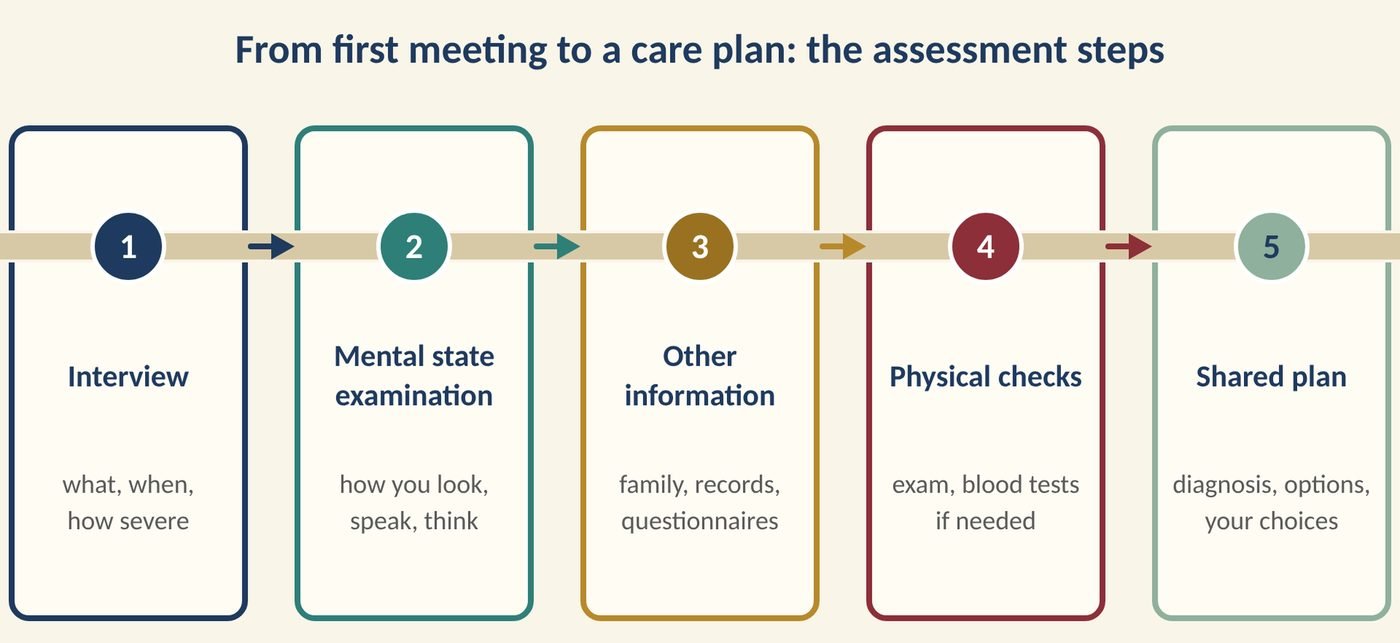
Figure 33.1 The steps of an assessment, from first meeting to a shared plan.
- The current problem: what you notice, when it started, how often, how severe, and what makes it better or worse
- Mood, anxiety, energy, sleep, and appetite
- Thoughts: worries, unusual experiences, thoughts of self-harm or suicide
- Behaviour and coping: including alcohol, drugs, and medicines
- Daily functioning: work, study, relationships, self-care
- Personal history: childhood, schooling, major life events, losses, and any trauma
- Past mental health care and what helped
- Family history of mental illness
- Physical health and medicines
- Current life situation: home, money, support, and safety
You may be asked sensitive questions. Honest answers, even when difficult, help the clinician help you.
Step 2: The mental state examination
During the interview, the clinician also observes things such as appearance, speech, mood, thinking, perception (for example, hearing voices), concentration, memory, and insight into the problem. This structured observation gives a snapshot of how you are at that time.
Step 3: Standardised questionnaires and rating scales
Short questionnaires can help measure the severity of symptoms and track change over time. Examples include scales for depression (such as the PHQ-9), anxiety (such as the GAD-7), trauma, ADHD, and many others. They support a clinician’s judgement; they do not replace it. Online quizzes that claim to diagnose you are not reliable.
Step 4: Physical examination and tests
Because physical illness can mimic or cause mental symptoms, clinicians may order:
- Blood tests (thyroid function, blood count, vitamin levels, blood sugar, liver and kidney function)
- Checks for alcohol or drug use
- Blood pressure, heart tests, and weight
- Brain scans (CT or MRI) when there is a reason to suspect a physical brain problem, such as head injury, sudden personality change, or unusual symptoms
- Sleep studies when sleep problems are prominent
Step 5: Information from others
With your permission, relatives, teachers, or partners may give extra information. For children and for conditions such as ADHD or dementia, this is especially valuable.
Step 6: Psychological testing
A clinical psychologist or neuropsychologist may use specialised tests to assess:
- Intelligence and learning: to understand strengths and learning difficulties
- Attention and memory
- Personality
- Autism and developmental assessments
- Cognitive decline in older adults
Testing is done in a quiet room and may take from an hour to several sessions.
Step 7: Formulation and diagnosis
The clinician combines all the information into a formulation, a summary that explains what is happening and why, based on biological, psychological, and social factors. From this comes a diagnosis (or sometimes a “working diagnosis” that will be reviewed), along with a plan.
33.5 The risk assessment
Every good assessment includes a check of safety. The professional may ask, directly and kindly, about thoughts of suicide, self-harm, or harming others, and about protective factors such as family, reasons for living, and future plans. This is routine and not a sign they think you are “dangerous.” Honest answers allow the right support.
33.6 Common diagnostic challenges
Overlap of symptoms
Many conditions share symptoms. For instance, poor concentration occurs in depression, anxiety, ADHD, trauma, sleep deprivation, and thyroid disease. Clinicians must carefully tease apart causes.
Comorbidity
It is common to have more than one condition at once. Around half of people with one anxiety or mood disorder also have another. A good plan addresses all of them.
Changes over time
A diagnosis may be refined as new information appears or as the person’s situation changes. For example, someone first diagnosed with depression may later show episodes of mania, leading to a diagnosis of bipolar disorder.
Culture and context
Ways of expressing distress differ across cultures. Some communities describe emotional pain mainly through physical symptoms; others have culturally specific syndromes. A skilled clinician considers language, beliefs, and cultural context, and uses interpreters when needed, so as to avoid misdiagnosis.
Normal reactions versus disorders
Grief after a loss, sadness after a setback, or worry before a major event are normal. Diagnosis is not made merely because someone is upset. Professionals look for severity, duration, and impact on life.
33.7 How accurate is diagnosis?
Because there are no definitive biological tests for most conditions, agreement between clinicians is good for some diagnoses (such as autism or schizophrenia, when assessed carefully) and lower for others (such as generalised anxiety or some personality disorders). Getting a second opinion is reasonable and common, particularly when symptoms do not match the diagnosis or treatment is not working.
33.8 Understanding and living with a diagnosis
Common reactions
People respond to a diagnosis in different ways:
- Relief: “At last I know what is wrong.”
- Sadness or fear: “Will I always be like this?”
- Denial: “They must be wrong.”
- Shame or stigma: “People will think less of me.”
- Hope: “Now I can get the right help.”
All of these are normal. Give yourself time.
Questions to ask your clinician
- What is my diagnosis, and what does it mean in plain words?
- What do you think caused it?
- How certain are you, and could anything else be going on?
- What are my treatment options, and what are the benefits and risks of each?
- How long before I might notice improvement?
- What can I do for myself?
- How will we know if the treatment is working?
- What should I do if things get worse?
- How should I tell family, school, or my employer, if at all?
- What is the long-term outlook?
Privacy and sharing
You decide who to tell. Many people find it helpful to share with a few trusted people. In some countries, laws protect you against discrimination at work or school and allow reasonable adjustments. Medical records are confidential and are shared only with your permission or where the law requires.
33.9 Labels: helpful and harmful
Labels can be a source of understanding but also of stigma. Some people embrace their diagnosis as part of their identity; others prefer not to. Either choice is valid. A few points to remember:
- You are not your diagnosis. You are a person who has a condition.
- Avoid using diagnoses as insults or jokes.
- Do not diagnose friends or family members; leave it to professionals.
- Avoid self-diagnosis from social media videos or online lists. Traits described are often common to everyone, and wrong labels can mislead people or delay proper care. At the same time, if something strikes you as familiar, it is entirely reasonable to bring it to a professional for assessment.
33.10 Screening versus diagnosis
A screening tool is a short test that flags people who may need a full assessment. Screening is not diagnosis. A high score means “talk to a professional,” not “you have the condition.” Likewise, a low score does not guarantee you are well if you are worried.
33.11 Assessment of children and young people
Children cannot always describe their feelings in words, so assessments include:
- Interviews with parents or carers and the child
- Information from school
- Observation of play and behaviour
- Developmental history from pregnancy and early years
- Questionnaires for parents and teachers
- Tests of learning, speech, or cognition when appropriate
Early assessment is valuable because earlier help brings better results. If you suspect a problem, do not “wait and see” for too long.
33.12 Digital tools and apps
Apps, online screening, and teletherapy can improve access, especially where services are limited. Use those from reputable health organisations, and remember that tools support but do not replace a qualified professional, especially in crisis.
Reflection activity
- Think of a time you or someone close was given a label (a diagnosis, a nickname, a “type”). How did it help? How did it hurt?
- What three questions would you ask a clinician at a first assessment?
- Which people in your life could you tell about a diagnosis, and how would you decide?
Key points to remember
- Diagnosis rests mainly on a careful interview and observation, supported by questionnaires, physical checks, and sometimes psychological tests.
- Doctors use agreed systems (ICD-11 and DSM-5-TR) so that diagnoses are consistent.
- Physical illnesses can mimic mental health conditions, so medical checks matter.
- You have the right to ask questions, seek a second opinion, and decide who to tell.
- A diagnosis is a guide to help, not a definition of who you are.
This book is for education and general awareness. It does not replace diagnosis or treatment by a qualified professional. If anyone is in danger, contact your local emergency services.