Five Senses and Five Elements
A map, not a diagnosis : Samya is a proportion. It is not a blood test and not a reason to skip a clinic.
20.1 Why this map sits beside psychology
Ancient Hindu and Ayurvedic traditions describe five great elements (Pancha Mahabhuta) as the building blocks of everything. Each element is linked with one of the senses and with a quality of mind. This old map is also a practical way to understand how our nervous system reacts to the stresses of modern life.
A Map is Not a Medical Diagnosis The goal of understanding these elements is samya (proportion or balance). However, we must be very clear: this ancient map is a guide for your daily routine, not a clinical diagnosis. Saying you have "too much Fire" is a helpful way to understand your anger, but it is not a blood test, and it is never an excuse to avoid a medical clinic.
The Sensory Diet Instead, use this map as a "sensory diet." It gives you a simple language to understand what you are feeding your nervous system. If your mind is racing and panicked, you know you need to reduce the "Air" (chaotic movement and noise) and increase the "Earth" (heavy, steady, grounding routines).
Understanding Your Baseline Mental health problems often start when a natural weak spot meets real-life stress. We all have different baselines. When stressed, some people naturally burn hot with anger and frustration (an excess of Fire), while others scatter, worry, and panic (an excess of Air).
Understanding your elements simply helps you name your natural weak spot. But your baseline is not your fate. When you take practical action—whether that is booking a therapy session, taking prescribed medicine, or simply getting a full week of deep sleep—you actively change your physical reality and move your mind back into balance.
The Modern Disconnect from the Elements
The five elements are a useful idea today because many of us live far from nature. For most of history, people lived in daily contact with soil, water, sun and open air. Some researchers think this distance adds to modern stress. Spending time outdoors is a simple, healthy habit.
Losing Earth (Prithvi): We traded walking on soil for walking on concrete. Some early research suggests that contact with nature and natural soil may support mood. Time outdoors is a simple, healthy habit.
Losing Water (Jala): Many of us drink more sugary or caffeinated drinks than water. Even mild dehydration can make us tired, foggy and irritable, which can feel like low mood or anxiety.
Losing Fire (Agni): We traded natural sunlight for the artificial blue light of screens. The human brain uses the natural fire of the sun to set its internal clock (the circadian rhythm). Staring at the artificial light of phones and laptops late at night suppresses melatonin, destroying our sleep architecture and leading to the chronic exhaustion that drives clinical depression.
Losing Air (Vayu): We traded open winds for stagnant, recycled indoor air. Furthermore, sitting hunched over computer desks all day forces the body into shallow, weak breathing. Biologically, shallow chest breathing signals the brain's survival centre that we are in danger, keeping the nervous system trapped in a low-grade, constant panic.
Losing Space (Akasha): We traded open horizons and silence for crowded cities and constant digital noise. The modern mind is relentlessly bombarded with notifications, news, and demands. We have lost the physical and mental "empty space" required for the brain to rest, process heavy emotions, and recover from cognitive fatigue.
20.2 The five elements
| Element | Sense | Quality | Body | Mental qualities |
|---|---|---|---|---|
| Earth (Prithvi) | Smell | Solid, stable, heavy, grounding | Bones, teeth, nails, tissues, muscles | Stability, patience, reliability, grounded Ness |
Practical Meaning: Earth represents your physical reality and psychological stability. It is the foundation that keeps you patient and secure. When severe trauma or panic shatters your sense of safety, the mind loses its anchor. This is exactly why modern trauma therapists use "grounding techniques"—like asking you to press your bare feet into the solid floor and the practice of walking or standing directly on natural surfaces like grass, soil, sand, or unsealed rock —to physically pull a terrified brain back to the safety of the present moment. The Connection: You cannot smell pure light or empty space; you can only smell physical matter. Odor is simply microscopic particles of a physical object entering your nose. Earth represents this solid, undeniable physical reality. The Psychology: Biologically, smell is our most primitive survival sense, wired directly into the deepest, non-verbal part of the brain (the limbic system). When a person is having a severe panic attack, their mind is flying away in a storm of terrifying thoughts. A therapist’s first job is to bring them back to "Earth." Because smell is so deeply physical, having a panicking person smell a strong, familiar scent (like peppermint or a specific soap) acts as a heavy anchor, instantly bypassing the racing thoughts and pulling the nervous system back down to solid reality. |
||||
| Water (Jala) | Taste | Liquid, fluid, cohesive, adaptable | Blood, lymph, saliva, digestive juices, fluids | Emotional flow, adaptability, compassion, flexibility |
Practical Meaning: Water is cohesive and constantly adapting to its container. In the mind, this represents your ability to process grief, feel compassion, and adapt to major life changes without breaking. When we suppress heavy emotions, our psychological "water" becomes stagnant or frozen. True mental resilience is not about being as hard as a rock; it is about having the courage to let your emotions flow and adapt like water. The Connection: You cannot taste a dry object with a perfectly dry tongue. The sense of taste requires moisture (saliva) to dissolve food so the tastebuds can process it. Water is the element of dissolving, mixing, and flowing. The Psychology: In classical thought, the word for taste (rasa) is the exact same word used for "emotion." Water represents the emotional flow of the mind. Because taste and emotion are biologically linked, we naturally use food to manage our feelings. When we feel sad, stressed, or emotionally "dry," we reach for heavy, sweet comfort foods to soothe ourselves. Understanding this connection removes the shame around emotional eating. You are not just lacking willpower; your brain is simply using the physical sense of taste to try and comfort a heavy emotional wave. |
||||
| Fire (Agni) | Sight | Hot, transforming, illuminating, metabolic | Eyes, digestive fire, metabolism, temperature | Intelligence, clarity, transformation, courage, ambition |
Practical Meaning: Fire transforms whatever it touches. Biologically, it digests your food; psychologically, it digests your life experiences. It is the sharp, bright intellect (buddhi) that helps you make clear decisions and find the courage to change. However, when this fire burns out of control due to chronic stress or an imbalanced nervous system, it manifests as severe irritability, burning anger, and destructive impulses. The Connection: Without light (fire), the eyes see absolutely nothing. Fire is the element that illuminates the dark and transforms whatever it touches. The Psychology: Sight is our primary tool for clarity and focus. Biologically, when you become intensely angry or terrified (when your inner "fire" flares up), your pupils dilate and you experience "tunnel vision," losing sight of the bigger picture. In therapy, we use the eyes to process and cool down this fire. For example, in EMDR therapy for trauma, specific eye movements are used to help the brain literally "digest" a burning, painful memory so it no longer triggers an explosive reaction. |
||||
| Air (Vayu) | Touch | Mobile, light, dry, moving | Lungs, breath, nervous system, movement, elimination | Creativity, movement, communication, flexibility |
Practical Meaning: Air governs speed and movement. A healthy Air element gives you a creative, communicative, and fast-moving mind. But because air is inherently unstable, it is the root of modern anxiety and conditions like ADHD. When the nervous system is overwhelmed, the mind races like a hurricane, focus scatters, and panic takes over. This is why slow, controlled breathing is always the very first clinical step to calm an anxious mind—you must slow the physical wind to quiet the mental storm. The Connection: You cannot see the wind, but you know it is there because you can feel its pressure moving against your skin. Air represents constant movement, and touch is the physical boundary where we feel that movement. The Psychology: In the body, the "Air" element governs the rapid movement of the nervous system. When a person suffers from severe anxiety, ADHD, or a racing mind, they have an excess of this restless Air energy. Because the skin is covered in nerve endings, physical touch is the fastest way to intercept a racing nervous system. This is why placing a firm, warm hand on your own chest, receiving a tight hug, or using a weighted blanket instantly slows down a racing mind. The steady pressure of touch calms the chaotic wind of the nerves. |
||||
| Space (Akash) | Hearing | Expansive, subtle, all-pervading | Empty spaces: mouth, nostrils, tract, vessels | Expansion, consciousness, connection |
Practical Meaning: Space is the subtle, empty container that allows all the other elements to exist. In mental health, Space is perhaps the most important concept of all. It represents the crucial gap between a trigger and your reaction. When you are highly reactive or angry, there is zero space in the mind. Mindfulness and therapy are essentially the hard work of creating "mental space"—giving you the room to observe a painful thought without instantly acting on it. The Connection: Sound cannot exist without a physical space to travel through and resonate within. Space is the subtle, empty container that allows vibration to be heard. The Psychology: Space represents the crucial gap between a trigger and your reaction. When we are stressed, our minds feel incredibly crowded and loud—there is no "space" to think. Hearing is the sense that connects us across distance. In mental health, creating Space is the core of mindfulness. It involves learning to sit quietly and listen—both to the sounds of the room and the silent gaps between your own thoughts. When you cultivate this quiet internal space, you finally have the room to observe a painful feeling without instantly reacting to it. |
||||
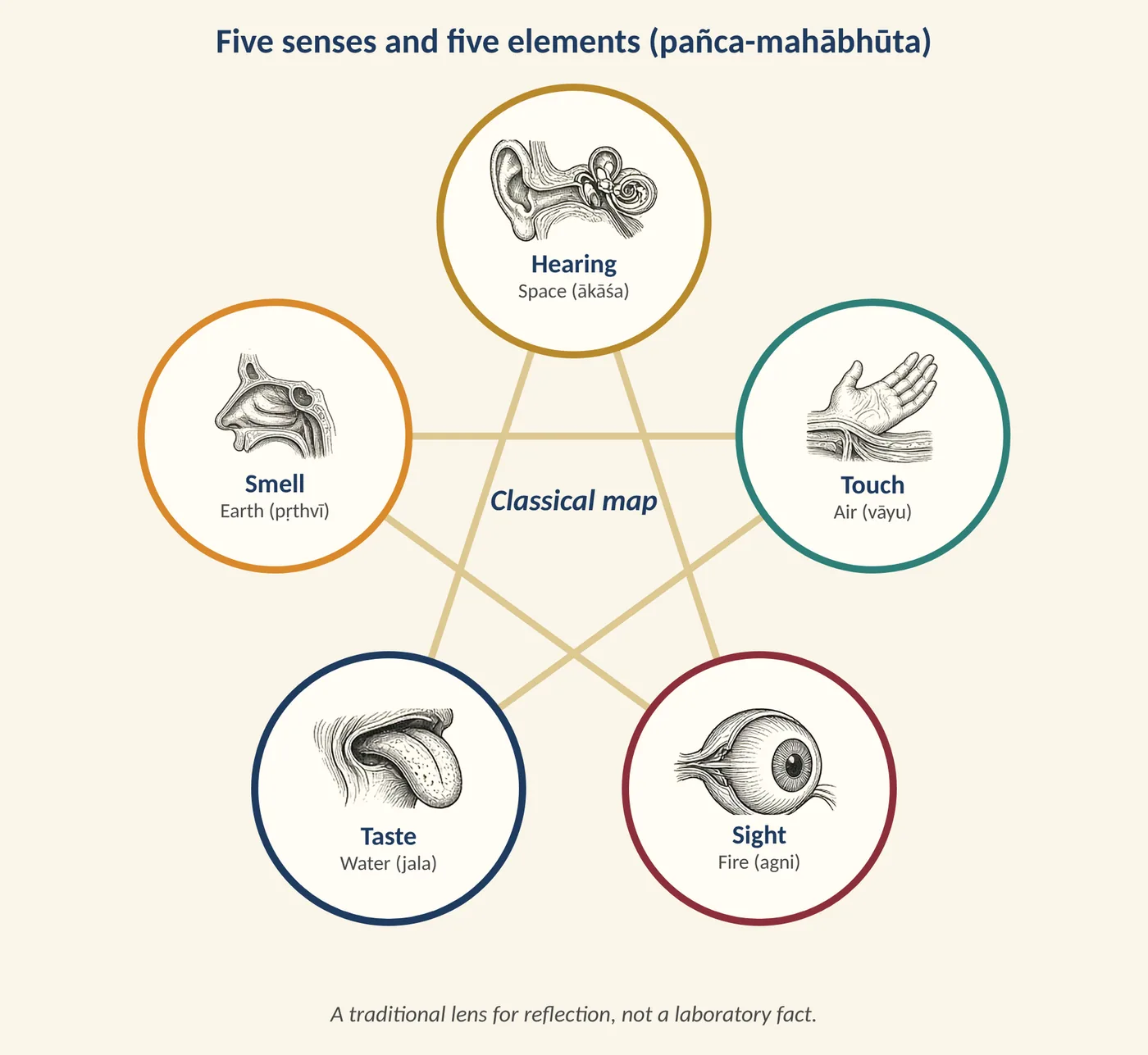
Figure 20.1 The classical map of five senses and five elements.
Earth (Priithvi)
Imbalance: anxiety, restlessness, feeling ungrounded, digestive issues. Balancing practices: walking barefoot on earth, gardening, root vegetables, grounding meditation.
Water (Jala)
Imbalance: emotional instability, rigidity, dehydration, kidney issues. Balancing practices: adequate hydration, swimming, being near water, emotional expression.
Fire (Agni)
Imbalance: anger, irritability, inflammation, digestive problems, perfectionism. Balancing practices: moderate sun exposure, cooling foods, forgiveness practices, avoiding overheating.
Air (Vayu)
Imbalance: anxiety, fear, restlessness, insomnia, constipation, dry skin. Balancing practices: pranayama (breathing practice), regular routine, warm foods, massage, grounding activities.
Space / ether (Akash)
Imbalance: feeling disconnected, isolation, spaciness, poor communication. Balancing practices: meditation, chanting, singing, silence, creating physical and mental space.
20.3 Combinations in lived life
-
Earth + water: mud, body, heaviness; depression's stuck-in-the-clay; also grounding and containment.
-
Water + fire: steam, passion, tears that heat, inflammation of feeling.
-
Fire + air: flame in wind — racing thought, panic, inspiration that will not sit.
-
Air + space: dissociation or meditation, depending on safety and skill.
-
All five in balance: the old word is samya — health as a proportion, not a mood.
20.4 Practical applications
Excess Vata (air + space)
Symptoms: anxiety, insomnia, restlessness, fear. Treatment language: warm grounding foods; regular routine; oil massage; calming practices.
Excess Pitta (fire)
Symptoms: anger, irritability, inflammation, perfectionism. Treatment language: cooling foods; moderation; forgiveness; avoiding overheating.
Excess Kapha (earth + water)
Symptoms: depression, lethargy, attachment, stagnation. Treatment language: stimulating activities; light foods; exercise; variety.
20.5 Meditation on elements
Element visualisation practice:
-
Earth: visualise roots growing from your feet into the ground. Feel stability.
-
Water: imagine a calm lake within you. Feel emotional flow and adaptability.
-
Fire: visualise a gentle flame at the solar plexus. Feel clarity and transformation.
-
Air: feel your breath moving freely. Imagine lightness and creativity.
-
Space: sense the vast space around and within you.
If visualisation spikes panic or dissociation, stop and return to a 4-in, 6-out breath or a walk. That is psychology first.
20.6 One companion verse
Sanskrit Text:
भूमिरापोऽनलो वायुः खं मनो बुद्धिरेव च ।
अहङ्कार इतीयं मे भिन्ना प्रकृतिरष्टधा ॥
Pronunciation:
bhumir apo 'nalo vayuh kham mano buddhir eva ca |
ahankara itiyam me bhinna prakrtir astadha ||
Translation: Earth, water, fire, air, space, mind, intellect, and I-making — this is My eightfold nature.
Practical Meaning for Daily Health: In modern society, we often make the mistake of treating the physical body and the mind as two completely separate things. This famous verse corrects that error. Notice how it lists the five physical elements (Earth, Water, Fire, Air, and Space) right alongside the three psychological faculties: the reactive mind (manas), the clear intellect (buddhi), and the ego (ahankara).
Classical wisdom teaches that there is no separation. Your physical biology and your mental health are built from the exact same continuous system. What affects your physical body directly impacts your mind.
But there is a clear limit. The five elements are a helpful map for daily self-care and balance, but a map is not medical treatment. If someone is badly affected by clinical depression, bipolar disorder or trauma, they still urgently need a qualified psychiatrist and proper treatment.
Reference — Bhagavad Gita 7.4
Reflection activity
-
Which element feels most balanced in your life right now?
-
Which element feels out of balance?
-
What practices could help restore balance?
-
How do your senses relate to your current mental state?
-
Create a daily practice incorporating all five elements — as habit, not as a diagnosis.